
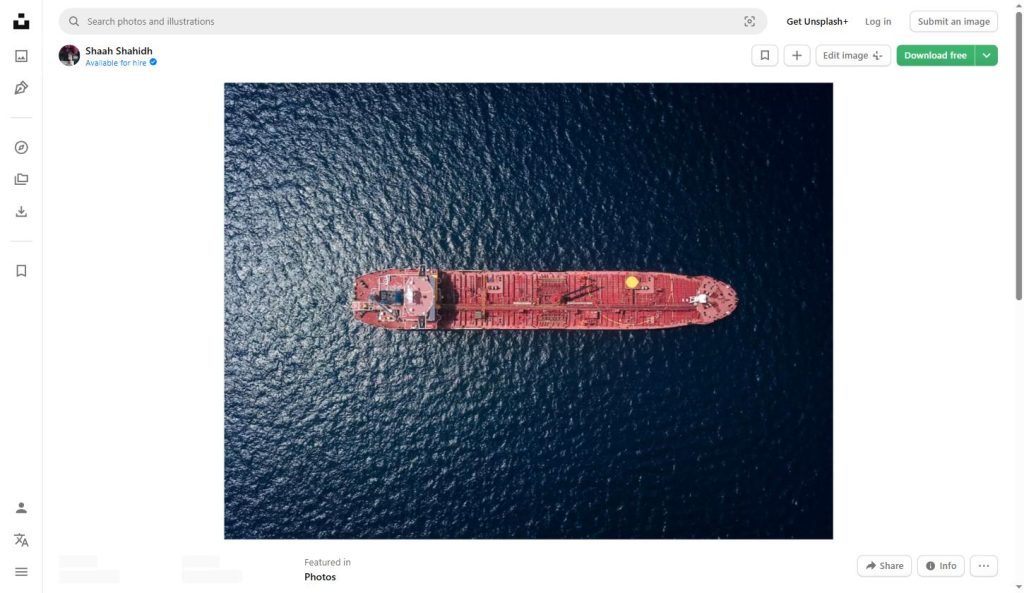

This USA Iran War 2026 intelligence briefing report is a sourced intelligence briefing on the active USA-Iran war, compiled from live reporting by Reuters and the Associated Press. It separates verified facts from disputed claims, flags information gaps, and closes with an analyst forecast. Confidence levels and sources are noted throughout. For background on how this war started, see our earlier report, Explosive US-Iran-Israel Conflict 2026: The Shattering Reality of the February Ultimatum.
USA Iran War 2026: Executive Summary
The war between the United States and Iran began on February 28, 2026, when a joint US-Israeli strike killed Supreme Leader Ayatollah Ali Khamenei and other senior officials, triggering immediate Iranian retaliation against Israel and Gulf shipping lanes. Iran asserted control over the Strait of Hormuz, the waterway that historically carried roughly a fifth of the world’s traded oil and gas, and has used access to it as its central point of leverage ever since (Confirmed — AP, updated July 12, 2026).
Since then, the two sides have cycled through ceasefires, blockades, and renewed strikes. A tenuous truce reached on April 7 collapsed within weeks; a US blockade of Iranian ports followed in mid-April; and an interim deal signed on June 17 saw Iran agree to dilute its stockpile of highly enriched uranium in exchange for eased sanctions and the right to sell oil freely. That interim deal is now roughly half-expired and under severe strain.
In the most recent 72 hours (July 10–12), US Central Command says it completed a third round of strikes in a single week, hitting more than 140 Iranian military targets after Iran struck a Cyprus-flagged container ship and left a crew member missing. Iran declared the Strait of Hormuz closed “until further notice,” while President Trump maintains it remains open to commercial traffic. Iran’s Health Ministry says the strikes over the preceding two days killed at least 17 people and wounded 115 (Partially verified — sourced only to Iranian officials, per AP).
Trump has publicly declared the ceasefire “over” while simultaneously allowing negotiations to continue, and has said retaliation would be automatic if he were assassinated. Iran’s new Supreme Leader, Mojtaba Khamenei, has not appeared in public since March and has vowed from hiding to avenge his father’s killing. Oil prices, which peaked near $120 a barrel earlier in the war, have swung between the high-$60s and low-$80s depending on strait access, and the volatility is already reshaping global supply chains, from semiconductor-grade helium to shipping insurance.
Update — July 13, 2026, 10:40 PM UAE time: Trump says the US is reinstating its blockade on Iranian shipping in the Strait of Hormuz and will charge a 20% cargo-value toll for passage, a reversal of Washington’s earlier public opposition to any tolls; the UN’s International Maritime Organization says it sees no legal basis for mandatory tolls. Brent crude jumped 7.8% to $81.92/barrel and AI-linked stocks (Nvidia, Micron, SK Hynix) sold off alongside broader market weakness. Bahrain, Kuwait and Jordan reported fresh attacks, and Iran reported at least two more deaths in Hormozgan, Khuzestan and Markazi provinces. (Source: AP, updated through 10:14 PM GMT+4 / 10:14 PM UAE time, July 13, 2026)
Methodology & Source Hierarchy
This briefing prioritizes sources in three tiers, consistent with standard intelligence-analysis practice: first, official government and multilateral statements (CENTCOM, US State Department, Iranian state media where explicitly labeled as such, Oman’s foreign ministry); second, wire services and major outlets with on-the-ground sourcing (Reuters, AP); third, think-tank and analyst commentary for strategic context. Every factual claim above is tagged with a confidence level — Confirmed, Partially Verified, or Unconfirmed — based on how many independent tiers corroborate it. Claims sourced to a single government’s own media, or to anonymous officials, are flagged accordingly rather than presented as settled fact.
Verified Timeline: February 28 – July 13, 2026
- Feb. 28 — Israel and the US kill Supreme Leader Khamenei and top officials in a joint strike; Iran retaliates and seizes de facto control of the Strait of Hormuz. War begins.
- Mar. 2 — Hezbollah fires on Israel from Lebanon; Israel invades and occupies parts of southern Lebanon.
- Mar. 8 — Iran names Mojtaba Khamenei, one of the late leader’s sons, as new Supreme Leader; he has not appeared publicly since, reportedly injured in the opening strikes.
- Apr. 7 — A tenuous two-week ceasefire is reached, without Israel as a party to it.
- Apr. 12 — Face-to-face US-Iran talks in Islamabad end without agreement.
- Apr. 13 — The US begins a naval blockade of Iranian ports to pressure Tehran over the strait.
- Apr. 17 — Iran briefly reopens the strait to shipping.
- Apr. 21 — Trump extends the ceasefire indefinitely.
- May 3 — A US effort to escort ships through the strait is announced, then abandoned.
- May 31 — Israel’s ground invasion of Lebanon reaches its deepest point in over 25 years.
- Jun. 3 — Israel and Lebanon agree to renew their ceasefire; fighting resumes within days.
- Jun. 14–17 — Trump announces, then signs, an interim US-Iran deal: Iran dilutes its enriched-uranium stockpile in exchange for sanctions relief.
- Jun. 22 — Vice President JD Vance meets Iranian officials in Switzerland, calling it a foundation for a final deal.
- Jul. 1 — Qatari and Pakistani mediators report “positive progress” in separate US-Iran talks.
- Jul. 4–6 — Iran holds a multi-day funeral for Khamenei; talks pause.
- Jul. 7 — Iran is accused of striking three tankers in the strait; the US retaliates with strikes on dozens of targets and reinstates oil sanctions.
- Jul. 8–9 — Trump declares the ceasefire “over”; new US strikes hit Iran, which fires back at Bahrain, Jordan, Kuwait and Qatar.
- Jul. 10 — Trump threatens further strikes, citing calls for his assassination during Khamenei’s funeral.
- Jul. 12 — The US strikes over 140 targets after Iran fires on a container ship; Iran declares the strait closed, the US says it remains open.
- Jul. 13 — Trump says the US is reinstating a naval blockade on Iranian shipping in the strait and will charge a 20% cargo-value toll for passage, drawing objections from the UN’s International Maritime Organization; CENTCOM reports additional strikes and a first-time use of armed drone boats, while Bahrain, Kuwait and Jordan report fresh attacks and Iran reports two more deaths.
Primary sources: AP’s timeline of the Iran war and AP report on the reinstated blockade, updated July 13, 2026. Confidence: High — corroborated across multiple AP and Reuters reports.
Current Battlefield Situation
US Central Command has now conducted three rounds of strikes against Iran within a single week (week of July 6–12), culminating in a July 12 wave that hit more than 140 targets, mostly missile and air-defense systems and small IRGC fast-attack boats around the Strait of Hormuz. Explosions were reported in the coastal towns of Bandar Abbas and Sirik. CENTCOM says the goal is to “degrade Iran’s ability to attack civilian mariners and commercial ships freely transiting the strait.”
Iran’s Revolutionary Guard says it fired warning shots at vessels that ignored instructions to use its “approved route” through the strait, striking a Cyprus-flagged container ship and leaving a crew member missing, along with a separate incident involving an Indian national missing from the vessel GFS Galaxy off Oman. Iran’s IRNA state media also reported missiles launched by an unnamed “enemy” toward Qeshm Island — an attack neither Israel nor the US has claimed, which US officials attribute on background to a “rogue faction of Iranian hard-liners” trying to sabotage the ceasefire (Unconfirmed, single-source).
On July 13, CENTCOM said it struck additional sites — air-defense systems, radar, missile and drone equipment and small boats — and disclosed a first-of-its-kind strike using armed drone boats (“Corsair” unmanned surface vessels) against an Iranian ship-maintenance facility and submarine at Bandar Abbas. Missile-alert sirens sounded three times in Bahrain, Kuwait’s consulate in Iraq was attacked, and Jordan said it intercepted four Iranian missiles with no casualties. Iranian state media reported at least two people killed in Hormozgan, Khuzestan and Markazi provinces, with additional strikes reported in Sistan-Baluchestan province.
On the proxy front, Hezbollah remains bogged down in its own war with Israel in southern Lebanon rather than acting as a force multiplier for Iran, which represents a meaningful degradation of Tehran’s traditional regional leverage compared with the pre-war baseline. Iran’s July 8–9 retaliation for US strikes also spread to Bahrain, Jordan, Kuwait and Qatar, suggesting Tehran is using regional escalation as a pressure and signaling tool rather than opening deliberate new fronts.
Confidence note: Strike tempo, target counts, and CENTCOM statements are independently corroborated (High confidence). Attribution of secondary strikes on Iran, and precise casualty figures (17 dead, 115 wounded, per Iran’s Health Ministry), rely on single-source or state-media reporting and should be treated as Partially Verified.
Diplomatic Situation
On the diplomatic front of the USA Iran War 2026, diplomacy is running on two tracks simultaneously: a US-Iran negotiation over a final settlement, and a narrower Iran-Oman technical channel focused specifically on strait security. The June 17 interim deal remains the operative framework — Iran dilutes its enriched-uranium stockpile, the US eases sanctions — but both the US and Iran accuse each other of violating it. Washington ended waivers allowing Iran to sell oil in dollars after the July 7 tanker strikes; Iran’s Foreign Minister Abbas Araghchi called this a violation of “mutual compliance.”
On July 13, Trump said the US is reinstating its blockade of Iranian shipping in the strait and would charge a 20% cargo-value toll to help fund US protection there — a reversal of Washington’s prior public opposition to tolls, including Secretary of State Marco Rubio’s June 25 remarks that there was no Gulf support for such fees. The IMO said it sees no legal basis for mandatory transit tolls on an international waterway. Iran’s Foreign Ministry spokesperson Esmail Baghaei blamed Washington for the region’s instability and said Tehran would not allow IAEA inspectors to visit the nuclear sites the US bombed in 2025.
Oman’s foreign ministry says it and Iran have agreed to keep talking about the strait “at the technical and political levels.” Qatar and Pakistan continue to serve as mediators for the broader US-Iran channel, reporting “positive progress” as of July 1. Iraq’s prime minister is separately visiting Washington to sign oil and gas cooperation deals, a sign Gulf states are hedging by deepening bilateral ties with the US even as the regional security picture deteriorates.
A parallel and consequential diplomatic thread is NATO’s summit in Ankara, where Washington pushed allies on burden-sharing as the US signals it is reducing its traditional commitment to European defense — likely to free up strategic bandwidth for the Middle East. This is a structural, not incidental, shift worth tracking for its own implications on European defense spending and US global posture.
Information gap: Publicly available reporting reviewed for this briefing did not surface a clear, current statement of Russian or Chinese positions on the war itself (as opposed to its economic spillover). This is flagged as an open gap rather than an assumption of neutrality or non-involvement.
Great-power and regional positioning: Turkey’s role is currently institutional rather than combative — it hosted the NATO summit in Ankara where Washington pressed allies on burden-sharing. Pakistan and Qatar are the active mediators of the broader US-Iran channel, with Islamabad also having hosted direct US-Iran talks in April. Iraq is hedging toward Washington, with its prime minister set to sign oil and gas deals in the US capital. India’s exposure is direct rather than diplomatic: an Indian national is among those missing after the attack on the vessel GFS Galaxy off Oman, underscoring how the war’s shipping disruption reaches well beyond the belligerents themselves. Gulf Cooperation Council states (Bahrain, Jordan, Kuwait, Qatar) have absorbed Iranian retaliatory strikes without becoming combatants in their own right.
As noted above, verified public reporting reviewed for this briefing did not surface a clear, current statement of Russian or Chinese positions on the war itself — this remains a tracked information gap rather than an assumption of disengagement, particularly given China’s economic exposure via helium supply and broader Gulf energy imports.
Economic Impact
The USA Iran War 2026 is also a global economic story. Oil markets are the most direct transmission channel. Brent crude peaked near $120/barrel earlier in the war; after briefly returning toward pre-war levels, it jumped 5.2% to $78.02 on July 9 when Trump called the ceasefire “over,” then climbed further to $81.92 (up 7.8% on the day) on July 13 as Trump announced the renewed blockade and cargo toll. The 10-year Treasury yield has risen alongside oil, from 3.97% before the war to 4.62% as of July 13, as investors price in inflation risk and reduced expectations for rate cuts.
Equity markets have shown a shifting reaction as the war has dragged on: rate-sensitive and fuel-dependent sectors (homebuilders, airlines, cruise lines) sold off on renewed war headlines through early July, while AI-linked megacap stocks initially continued to dominate index performance and partly insulated the S&P 500 and Nasdaq from deeper losses. That insulation weakened on July 13, when the S&P 500 fell 0.7%, the Dow slipped about 0.2%, and the Nasdaq dropped 1.4% as chip stocks sold off alongside rising oil prices — Micron fell 4.9%, Nvidia fell 3.2%, and South Korea’s Kospi tumbled 8.9%, led by a 15.4% one-day drop in SK Hynix. The IMF projects roughly 3% global growth this year — a sluggish pace it attributes partly to the war, offset by AI-driven investment elsewhere in the economy.
Supply chains are also affected outside of energy: China has imposed a temporary export ban on helium, a gas critical to semiconductor manufacturing and MRI cooling, citing trade-law provisions without further elaboration. Analysts cited by AP say the move is more about China protecting its own chip industry amid a globally tight helium market — itself strained by the war — than a direct geopolitical signal. Separately, war-driven supply disruption has been linked to shortages affecting goods as varied as medical supplies reaching Sudan and consumer products including lipstick and pajamas, and has boosted solar-panel sales across energy-hungry Asian markets as buyers hedge against fuel volatility.
Confidence note: Market and price data are High confidence (independently reported, verifiable figures). Attribution of specific corporate or consumer-price effects directly to the war ranges from High (oil, Treasury yields) to Moderate (helium, consumer goods, where multiple contributing factors exist).
Intelligence Assessment: Fact vs. Speculation
Confirmed (High confidence, multiple independent sources):
- The war began Feb. 28, 2026 with the killing of Khamenei in a joint US-Israeli strike.
- An interim US-Iran deal was signed June 17, tied to uranium dilution and sanctions relief.
- The Strait of Hormuz has been repeatedly targeted and intermittently closed since the war began.
- The US conducted three distinct rounds of strikes on Iran in the week of July 6–12, including one hitting over 140 targets.
- Oil-price and bond-market moves are directly and verifiably tied to war headlines.
Disputed or unresolved:
- Whether the Strait of Hormuz is currently open or closed — Iran and the US are making contradictory public claims.
- Who conducted the strikes on Qeshm Island attributed to an unnamed “enemy” by Iranian state media.
- Whether a “rogue faction” of Iranian hard-liners, as anonymously described by US officials, is acting independently of Tehran’s formal command.
Likely propaganda or unverified messaging:
- Iranian state media’s framing of unattributed strikes as coming from an “enemy” may serve to avoid admitting an internal command failure or to preserve ambiguity for retaliation purposes.
- Social-media statements from senior officials on both sides (including specific weapons-readiness claims) function primarily as political signaling and should not be read as verified military posture.
Information gaps: Independent (non-Iranian, non-US) verification of casualty figures; a clear public record of Russian and Chinese positions on the war itself; IAEA confirmation of the pace and completeness of Iran’s uranium dilution under the June 17 deal.
Military Capability Assessment
Military capacity is a decisive factor in the USA Iran War 2026. This section reflects standard open-source defense analysis, not classified assessment. The United States retains overwhelming stand-off strike capacity in the theater: carrier strike groups, long-range precision munitions, and access to regional bases (5th Fleet in Bahrain, Al Udeid in Qatar, and bomber access via Diego Garcia) that together explain its demonstrated ability to sustain repeated large-scale strike packages, including the reported 140-target single-day operation.
Iran’s leverage is fundamentally asymmetric. Its principal tools are a large ballistic and cruise missile inventory, naval mines and fast-attack craft capable of threatening shipping in the confined waters of the Strait of Hormuz, and — historically — a regional proxy network. That network is currently weaker than its pre-war baseline: Hezbollah is absorbed in its own conflict with Israel rather than acting as a force multiplier for Tehran. Iran’s air force and integrated air defense were degraded by the initial Feb. 28 strikes that killed top leadership, which likely explains why Iran has relied more on missile/drone harassment and naval pressure than contested airspace engagement.
Gulf Arab states (Bahrain, Jordan, Kuwait, Qatar) function in this conflict primarily as secondary pressure points rather than active combatants, absorbing retaliatory strikes rather than initiating attacks — consistent with Iran using regional escalation as coercive signaling aimed at the US and Gulf partners rather than a strategy of opening deliberate new fronts.
Scenario Analysis
The probabilities below are analyst estimates based on current verified trends, not statistical or classified projections. They are presented to aid planning, not as predictions of certainty.
Scenario 1 — Managed Volatility (most likely, ~45%). The current cycle of strikes, pauses and talks continues through Q3 2026 without full collapse or full resolution. Trigger: further strait incidents follow the established pattern. Consequence: oil trades in a wide $65–$90 band with periodic shock spikes; no durable settlement, but no full-scale regional war either.
Scenario 2 — Escalation (~20%). The Lebanon front and Gulf-state strikes intensify into a more continuous multi-front campaign. Military implication: sustained multi-theater operations; Economic implication: oil sustained above $100; Political implication: NATO and Gulf-state strain deepens as the US is pulled deeper into the region.
Scenario 3 — Negotiated Settlement (~15%). A final deal replaces the interim agreement, codifying uranium limits with IAEA verification and a strait-security mechanism. Requires: Iranian leadership consolidation under the new Supreme Leader, and US willingness to formalize sanctions relief and non-aggression assurances. Likely concession: Iran accepts third-party monitoring of strait transit in exchange for guaranteed sanctions relief.
Scenario 4 — Regional War (~10%). Direct Israel-Iran exchanges combine with sustained Gulf-state involvement and a prolonged Hormuz closure. Economic impact: oil shock toward $120–$150, sustained shipping disruption, elevated global recession risk.
Scenario 5 — Black Swan (~10%). A catch-all for low-probability, high-impact triggers: an assassination attempt on Trump or the Iranian Supreme Leader, a confirmed nuclear breakout, or a major cyberattack on Gulf energy infrastructure. Consequence: rapid, unpredictable escalation, including the risk that Trump’s stated “automatic retaliation” posture could trigger disproportionate response before facts are verified.
Forecast
Next 24 hours: Expect continued low-level friction around the Strait of Hormuz and close attention to Iraqi PM’s Washington visit (oil/gas deals) as a signal of US regional realignment — why: both are direct extensions of trends already in motion as of July 12–13.
Next 7 days: Oman-Iran technical talks on the strait likely continue in parallel with intermittent strikes; Trump’s rhetoric will probably keep oscillating between “over” and “continuing talks” — why: this pattern has repeated at least three times since June 17 and reflects a deliberate negotiating posture rather than a fixed policy.
Next 30 days: The 60-day interim deal period (begun June 17) reaches its midpoint and likely a decision point — extension, renegotiation, or collapse — why: AP’s own reporting frames the current strikes as occurring “nearly halfway through” that window, making late July a natural inflection point.
Next 90 days: Watch whether Mojtaba Khamenei consolidates visible control or Iran’s command structure shows further strain from his continued absence, and whether IAEA verification of uranium dilution becomes a new flashpoint — why: leadership legitimacy and verification compliance are the two structural issues the interim deal left unresolved.
Next 6 months: Either a codified follow-on agreement replaces the interim deal (Scenario 3), or the conflict slides toward Scenario 2/4 with sustained higher oil prices — why: the interim deal was explicitly framed by both sides as a bridge, not an endpoint, so its expiration forces a choice.
Winners and Losers
Likely to benefit: Gulf oil producers with spare capacity, following the OPEC+ agreement on July 6 to modestly expand output; US and allied defense contractors; Asian solar-panel manufacturers benefiting from energy-hedging demand; AI-linked megacap tech stocks (Nvidia, Broadcom), which have so far remained largely insulated from war-driven volatility.
Likely to lose: Iranian civilians and the domestic economy bearing the direct cost of strikes and sanctions; global shipping and marine insurers absorbing war-risk premiums; consumers facing higher prices on an estimated 6,000-plus products tied to war-disrupted supply chains; rate-sensitive sectors like homebuilders and airlines; Lebanon, caught between Hezbollah’s war with Israel and its own reconstruction needs.
Business Impact by Sector
- Defense: Sustained demand for munitions and air-defense systems given demonstrated repeat-strike tempo.
- Energy: High volatility creates both trading opportunity and planning risk; Strait of Hormuz exposure remains the single biggest swing factor in global oil pricing.
- Cybersecurity: Elevated contingent risk to Gulf energy and shipping infrastructure, though no major confirmed cyber incident appears in verified reporting reviewed here.
- Shipping: Rerouting via Oman’s southern route and rising war-risk insurance costs are adding time and expense to Gulf transits.
- Insurance: War-risk premiums for vessels transiting the strait are a direct, quantifiable cost pass-through.
- Commodities: Beyond oil, helium supply is now constrained by China’s export ban, with knock-on effects for chipmakers and medical-device cooling systems.
- AI: Continues to dominate equity markets and has so far absorbed war-related shocks better than other sectors.
- Logistics: Documented disruption to medical supply lines (e.g., Sudan) illustrates how the war’s effects propagate well beyond the Gulf region itself.
- Semiconductors: Helium scarcity is a direct input-cost and supply risk for chip fabrication independent of the war’s more obvious oil-market effects.
Key Risks
- Oil shock: A sustained Hormuz closure remains the single largest near-term global economic risk tied to this conflict.
- Shipping disruption: Repeated attacks on commercial vessels are already forcing route and insurance changes independent of any formal closure.
- Proxy escalation: The Lebanon front could reignite more broadly if Hezbollah-Israel fighting intensifies.
- Nuclear risk: The war’s origins are tied to Iran’s enrichment program; verification of the June 17 dilution commitment is an unresolved flashpoint.
- Political instability in Iran: A Supreme Leader who has not appeared publicly in four months raises real questions about command cohesion.
- Global recession risk: Rising Treasury yields combined with oil-driven inflation risk could pressure central banks toward tighter policy at a fragile moment for growth.
Fact Check: Claims Circulating Publicly
- Verified: Israel and the US killed Khamenei on Feb. 28, sparking the war. (AP timeline)
- Verified: Iran named Mojtaba Khamenei as the new Supreme Leader on March 8. (AP)
- Verified: The US and Iran signed an interim deal on June 17 tied to uranium dilution and sanctions relief. (AP)
- Verified: The US struck over 140 Iranian targets in a single round, per a CENTCOM statement. (Reuters, AP)
- Verified: Oil hit wartime highs near $120/barrel before easing. (AP)
- Verified: The IMF projects roughly 3% global growth this year, citing the war as a drag. (AP)
- Partially verified: “The Strait of Hormuz is closed.” Iran says so; the US disputes it and says commercial traffic continues. Status is actively contested.
- Partially verified: “17 dead, 115 wounded” from the latest strikes — sourced solely to Iran’s Health Ministry, with no independent count available.
- Partially verified: Missiles fired at Qeshm Island by an unnamed “enemy” — reported only by Iranian state media without attribution.
- Partially verified: A “rogue faction” of Iranian hard-liners is sabotaging the ceasefire — sourced only to anonymous US officials.
- Partially verified: China’s helium export ban is “because of the Iran war” — China cited only trade-law compliance; independent analysts say domestic chip-supply protection is the more likely primary driver, with the war a contributing factor.
- Not supported: Claims of an already-declared, full-scale multi-state regional war. Verified reporting instead shows a recurring cycle of strikes, pauses and negotiation rather than a formally widened war.
This list reflects the most significant claims surfaced during this research session and is not exhaustive; readers should treat any claim without a named, attributable source as unverified.
Recommended Visual Assets
- A labeled map of the Strait of Hormuz showing shipping lanes, Iranian coastal cities (Bandar Abbas, Sirik, Qeshm Island) and the alternate Omani southern route.
- A timeline infographic spanning Feb. 28 to July 12, 2026.
- A Brent crude price chart overlaying key war milestones (ceasefires, strikes, the interim deal).
- A comparative military-posture graphic (US regional bases and assets vs. Iran’s missile/naval assets), sourced only from open-source defense data.
- A simple explainer graphic on the terms of the June 17 interim deal.
Historical Context: How This Compares to Past Gulf Crises
Comparing the USA Iran War 2026 to earlier flashpoints helps calibrate expectations. The Strait of Hormuz has been a flashpoint before, but the current war differs from earlier episodes in scale and structure. During the 1980s “Tanker War” phase of the Iran-Iraq conflict, attacks on shipping were frequent but neither side targeted the other’s top leadership directly, and no interim nuclear-linked deal was on the table. The 2019–2020 period of US-Iran tension — tanker seizures, the killing of Qassem Soleimani, and Iranian missile strikes on US forces in Iraq — was intense but short-lived and did not include a declared, sustained state of war with a formal ceasefire-and-relapse cycle like the one seen since February 2026.
What makes the present conflict structurally different is the combination of a decapitated Iranian leadership, a live nuclear-dilution agreement acting as the primary diplomatic anchor, and a US administration that has simultaneously reduced its rhetorical commitment to European defense burden-sharing while deepening its Middle East military tempo. That combination — leadership instability inside Iran plus a shifting US global posture — is why analysts should treat this less as a repeat of past flare-ups and more as a distinct, still-unfolding realignment of regional power, with the interim deal’s fate over the next 30 to 90 days as the key hinge point.
What to Watch Over the Next 7 Days
- Whether Iran-Oman technical talks produce a public statement on strait security.
- Any further attacks on commercial vessels transiting the Strait of Hormuz.
- Shifts in Trump’s public rhetoric on the ceasefire’s status.
- CENTCOM statements on strike tempo — increasing, pausing, or holding steady.
- Brent crude moving decisively above $85 or below $70.
- Public statements (or continued silence) from Supreme Leader Mojtaba Khamenei.
- Any independent, non-Iranian and non-US casualty verification from NGOs or UN bodies.
- Gulf state responses (Bahrain, Jordan, Kuwait, Qatar) — de-escalatory diplomacy vs. defensive posture.
- IAEA statements on uranium-dilution verification progress.
- Outcomes from the Iraqi PM’s Washington visit and any related oil and gas agreements.
For continuing coverage of this story, see our related reports: World News Today: US Strikes Iran Again as NATO Leaders Gather in Ankara and Top 20 News Updates Today. Primary sources for this briefing: Reuters Middle East and the AP Iran War hub, both accessed July 13, 2026.
The USA Iran War 2026 remains an evolving situation. This briefing reflects verified reporting available as of July 13, 2026 and will be updated as the situation develops.



Pingback: Iran-Oman Strait of Hormuz Deal: 6 Critical Facts
Pingback: Global Flashpoints: 4 Critical Stories From Iran to Ukraine
Pingback: Top Trending Stories Today: 10 Geopolitics & World Updates