


Welcome to AI explained — The Viral Minute’s living hub for everything happening in artificial intelligence right now. Here, AI explained means going one level deeper than the headline.
Reading time: 8 min · Trust Score: 90/100 · Updated regularly as the AI landscape evolves.
Summary
- Artificial intelligence in 2026 has moved from “chatbot novelty” to core infrastructure for business, government, and consumer products.
- The center of gravity is shifting from raw model capability to who controls the hardware, the regulation, and the distribution.
- This hub tracks four areas continuously: models & LLMs, AI hardware & infrastructure, AI in business & jobs, and AI regulation & governance.

Why AI Is the Defining Story of 2026
Every major technology cycle has one storyline that quietly determines the outcome of dozens of smaller ones. Right now, that storyline is artificial intelligence. Decisions being made this year about chip supply, model access, and government oversight will shape which companies dominate the next decade — and which jobs, industries, and consumer products change permanently as a result. Our goal with this hub is not to chase every AI headline, but to give you the small number of storylines that actually matter, updated as they develop.
What makes this cycle different from previous tech hype waves is how quickly the infrastructure layer became the constraint. In past software booms, the limiting factor was usually adoption or trust. In AI right now, the limiting factor is frequently physical: available chips, available power, and available data center capacity — none of which can be conjured as quickly as a software feature can ship.
That physical bottleneck is also why this story affects readers who have no direct interest in AI as a technology. Data center construction affects local electricity prices and water usage. Chip export restrictions affect diplomatic relationships between major economies. And workforce disruption from automation affects labor markets well beyond the tech sector. AI explained honestly has to include these second-order effects, not just the product announcements.
To get AI explained properly, it helps to see the sequence of events first.
A Quick Timeline: How We Got Here
AI explained properly means understanding the sequence of events, not just the latest headline. Here is the short version of how the industry arrived at this moment.
- 2022-2023: Consumer-facing chatbots go mainstream, triggering a wave of enterprise experimentation and a spike in venture funding for anything labeled “AI.”
- 2024: The initial hype cycle cools. Investors start separating companies with real usage and revenue from those riding the narrative. Chip demand from major labs starts outpacing supply.
- 2025: Open-source models from multiple countries close the performance gap with proprietary Western labs, changing the competitive assumption that only a handful of companies could build frontier AI.
- 2026: The conversation shifts from “which model is smartest” to “who controls the infrastructure, the rules, and the distribution.” This is the phase we are in now.
For a longer-run, data-backed view of these shifts, the Stanford AI Index Report is one of the few independent, non-vendor sources that tracks adoption, investment, and capability trends year over year — we reference it as a baseline when claims in daily coverage need context.
The Four Areas We Track
Starting with models makes sense, since most people encounter AI explained through a chatbot first.
1. Models & LLMs
Which AI models are winning adoption, and why. This includes major releases from Western labs as well as fast-moving open-source competition out of China.
Start here: Claude Sonnet 5 becomes a default model, and Tencent’s open-source Hy3 release — two stories that show how fast the competitive landscape is shifting.
The practical question for most readers is not which model scores highest on a benchmark, but which one is reliable enough to build a workflow around. That is a different kind of competition, and it rewards consistency and integration over raw novelty.
Open-source releases matter here for a reason that is easy to miss: once a capable model is free to run and modify, pricing power shifts away from any single vendor. That is why every major open-source release, regardless of country of origin, gets treated as a market event rather than just a technical one.
2. AI Hardware & Infrastructure
Behind every model release is a hardware race. Chip architecture, power efficiency, and data center capacity are becoming the real bottleneck for how much AI the world can actually deploy.
Start here: NVIDIA’s Vera Rubin chip, explained — our full breakdown of the platform, its risks, and who benefits.
Power is now as important as silicon. Training and running frontier models consumes enough electricity that data center site selection has become a negotiation with regional power grids, not just a real-estate decision. Expect more announcements framed around energy partnerships in the next year, not just chip specs.
Supply chain concentration is the other underappreciated risk. A small number of foundries and packaging facilities produce the components behind almost every advanced AI chip, regardless of which company’s logo is on it. Any disruption there — geopolitical or otherwise — ripples through every AI roadmap at once.

3. AI in Business & Jobs
How companies are actually deploying AI, where it is cutting costs, and where it is cutting headcount — plus how investors are separating durable AI businesses from hype.
Start here: AI job cuts and the rise of autonomous everything and why the startup market has stopped rewarding hype.
The job-loss headlines are real, but they are also incomplete on their own. What tends to disappear first is not entire professions but specific tasks inside them — first-draft writing, basic data entry, first-line customer support triage. What survives, and often grows, is the judgment layer around those tasks: deciding what to automate, checking the output, and handling exceptions.
For investors, the practical filter has become simple: is a company using AI to genuinely lower its cost structure or improve its product, or is “AI-powered” simply a phrase in the pitch deck? The market has gotten measurably less patient with the second category in 2026 than it was even a year earlier.
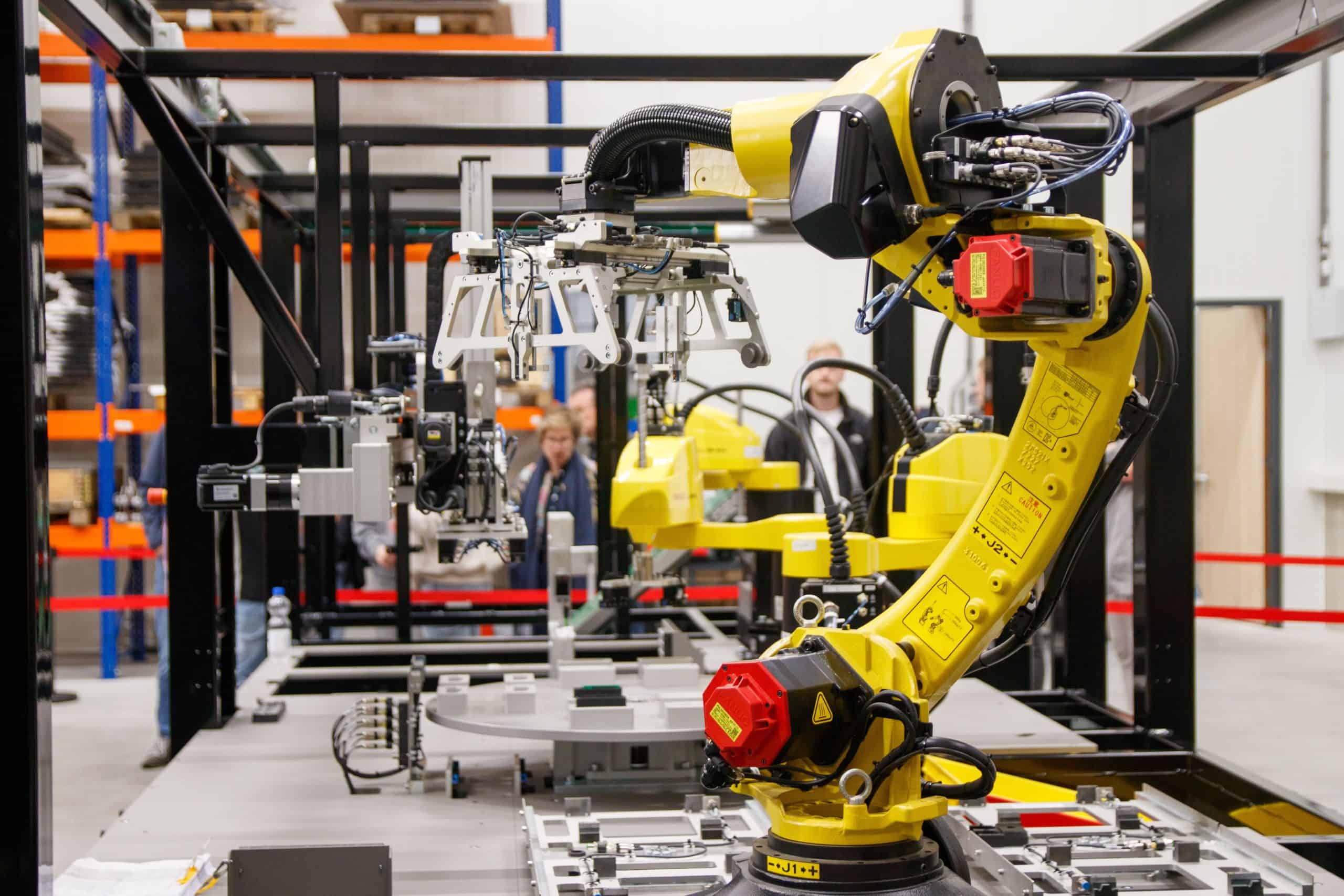
Rules are the fourth piece of getting AI explained completely.
4. AI Regulation & Governance
Governments are racing to catch up with deployment speed. This includes global coordination efforts as well as region-specific rules that affect how companies can train, license, and ship AI products.
Start here: the UN’s global dialogue on AI governance in Geneva, part of our daily roundup coverage.
The hardest part of AI regulation is not writing the rules — it is writing rules that do not immediately become outdated. Most current frameworks were drafted around the capabilities of models that are now two or three generations old, which is why so much of the current debate is about updating enforcement mechanisms rather than starting from scratch.
Companies operating across multiple regions are increasingly designing for the strictest applicable rule set globally, rather than maintaining separate compliant and non-compliant versions of a product. That single dynamic is quietly doing more to shape global AI development than any single piece of legislation.
How the Four Areas Connect
It is tempting to treat models, hardware, business impact, and regulation as four separate beats. They are not. A new model release only matters commercially if there is enough hardware capacity to serve it at scale. Hardware investment only makes sense if businesses are willing to pay for inference at a price that justifies the buildout. And none of it is stable if a regulatory decision in a major market suddenly restricts how a model can be trained, sold, or deployed there.
This is why we built this hub instead of just tagging stories “AI” and moving on. A chip story, a model release, and a regulatory hearing can all be describing the same underlying shift from three different angles. Reading them together, rather than as isolated headlines, is what actually helps you predict what happens next — which is the entire point of AI explained the way we try to do it.
Key AI Terms, Explained
A short glossary of terms that show up constantly in AI coverage — useful if you are catching up rather than reading every story as it breaks.
- Large Language Model (LLM): An AI system trained on huge amounts of text to predict and generate language — the technology behind most modern chatbots and writing assistants.
- Open-source model: A model whose underlying weights are published for anyone to run, modify, or build on, as opposed to being accessible only through a paid API.
- Inference: The process of actually running a trained model to produce an answer, as opposed to “training,” which is building the model in the first place. Inference costs are what most companies pay for day-to-day.
- Physical AI: AI systems designed to perceive and act in the physical world — robotics, autonomous vehicles, and industrial automation — rather than only processing text or images.
- Frontier model: Industry shorthand for whichever models currently represent the highest publicly known capability level, regardless of vendor.
- AI accelerator chip: Specialized hardware (like GPUs or custom silicon) built specifically to make AI training and inference faster and more energy-efficient than general-purpose processors.
These are the organizations worth watching once you have AI explained at a high level.
Notable Companies and Labs to Watch
You do not need to track every company in AI to understand the landscape — a handful of organizations are currently setting the pace across models, hardware, and deployment. This list will change as the market does; we treat it as a living reference, not a ranking.
- Frontier model labs: The small group of research organizations releasing the highest publicly benchmarked models, spanning both proprietary and open-source release strategies.
- Hardware platform makers: Companies designing the accelerator chips and system architecture that everything else in AI runs on — increasingly the actual bottleneck on industry growth.
- Hyperscale cloud providers: The infrastructure layer that rents out AI compute to everyone else, and whose capital spending is one of the clearest leading indicators of real (not hyped) AI demand.
- Applied AI companies: Businesses that do not build foundation models themselves but integrate them into specific industries — healthcare, logistics, finance — where the actual economic impact tends to show up first.
- Open-source contributors: Labs and communities publishing openly available model weights, which function as a check on how much proprietary vendors can charge for comparable capability.
Open-Source vs. Proprietary AI: Why the Distinction Matters
This distinction comes up constantly and is worth explaining once, clearly. Proprietary models are accessible only through a paid interface controlled by the company that built them — you never see or modify the underlying system. Open-source models publish the actual model weights, letting anyone run, inspect, or adapt them, usually at the cost of self-hosting the infrastructure to do so.
Neither approach is automatically “better.” Proprietary vendors argue their closed approach allows tighter safety controls and a more polished product; open-source advocates argue that broad access accelerates innovation and prevents a small number of companies from controlling access to a foundational technology. In practice, the rise of capable open-source alternatives has mostly functioned as a price check on proprietary vendors, which is why every major open release gets covered as a business story, not just a technical one.
Geography changes the picture too, once AI explained moves beyond a single country.
The Global AI Race: US, China, and the EU
Three regions are approaching AI from genuinely different starting points, and conflating them leads to bad predictions. The US model has largely been driven by private capital and a small number of well-funded labs racing on capability, with regulation arriving after the fact rather than shaping development from the start.
China’s approach has leaned heavily on open-source release strategies for its most competitive models, partly as a response to hardware export restrictions that limit access to the most advanced chips — a constraint that has, somewhat counterintuitively, pushed Chinese labs toward efficiency gains that reduce reliance on cutting-edge hardware.
The EU has taken the opposite approach: regulation first, deployment second, built around the idea that consumer protection and risk classification should be settled before, not after, mass adoption. The practical effect is that many AI products now reach EU users later than US or Chinese users, and sometimes in a modified form.
Where the Money Actually Flows
It is worth separating the AI economy into layers, because the profit is not distributed evenly across them. Chipmakers and infrastructure providers have captured an outsized share of AI-related revenue so far, largely because building the capacity to train and run models is the one part of the stack every other participant depends on regardless of which model wins.
Model developers themselves occupy a more precarious position than headlines suggest: training costs are enormous, competition is intense, and open-source alternatives place a ceiling on what they can charge. The layer generating the most durable, if less headline-grabbing, returns is often the “applied” layer — companies quietly using AI to cut costs or build features inside existing, profitable businesses, rather than selling AI as the product itself.
For readers trying to separate signal from noise in AI investment news, the simplest heuristic remains: infrastructure spending is a leading indicator of real demand, while funding-round announcements for model-layer startups are a lagging indicator of investor sentiment, which can move independently of actual usage.
With the mechanics of AI explained above, here is who is actually ahead.
Winners and Losers So Far
- Winners: chipmakers with system-level platforms (not just faster GPUs), cloud providers who can offer AI at scale, and companies using AI to cut real operating costs rather than for marketing.
- At risk: AI startups with no proprietary data or distribution advantage, workers in roles fully automatable by current-generation models, and smaller chip competitors without hyperscaler relationships.
None of these positions are permanent. A chipmaker that wins this cycle by owning system-level infrastructure could lose the next one if a competitor solves the same problem more cheaply. Treat this list as a snapshot of mid-2026, not a permanent scoreboard — we will update it as the picture changes.
Keeping AI explained accurately means tracking a few specific signals going forward.
What to Watch Next
Three things will matter most over the coming months: whether independent benchmarks validate the efficiency claims behind next-gen AI chips, whether open-source Chinese models keep closing the gap with proprietary Western labs, and whether global regulatory coordination produces real rules or just non-binding statements.
- Independent benchmarks: Whether third-party testing confirms or challenges the efficiency and performance claims vendors are currently making about next-generation hardware.
- Enterprise adoption rates: Real deployment numbers, not pilot programs, over the next two to three quarters — this is the difference between a platform that succeeds and one that stays a demo.
- Regulatory enforcement, not just announcements: Whether the rules being drafted now actually get enforced against major companies, or remain largely symbolic.
How We Verify AI Claims
AI coverage is unusually prone to overstatement, because so much of it originates from company press releases and executive statements rather than independent testing. Our approach on this hub is to separate three categories explicitly: what a company has officially confirmed, what independent parties have verified through testing, and what remains a claim awaiting evidence.
Where we can, we link directly to primary sources — official blog posts, filed regulatory documents, or independent research — rather than restating secondhand summaries. Where a claim is unverified, we say so plainly instead of presenting vendor marketing as settled fact. That distinction is reflected in the Trust Score at the top of this page and every explainer we publish.
Here is AI explained in the shortest form we could manage.
Key Takeaways
- AI in 2026 is an infrastructure and governance story as much as a product story.
- Hardware platforms, not just models, are becoming the real competitive battleground.
- Regulation is racing to catch up, and the outcome will shape which companies can operate where.
- This hub will be updated as each of these four areas develops — bookmark it as your starting point for AI on The Viral Minute.
A few more common questions we get once someone has AI explained to them for the first time.
Frequently Asked Questions
Is this page updated regularly?
Yes. Unlike our daily news coverage, this hub is a living page we revisit and expand as the AI landscape changes.
Where should I start if I’m new to AI news?
Start with the “Models & LLMs” and “AI Hardware & Infrastructure” sections above — they explain the two forces driving most other AI headlines.
Does The Viral Minute cover AI regulation outside the US?
Yes, including global coordination efforts and major regional frameworks as they develop.
What is the difference between AI and a large language model?
AI is the broad field; a large language model (LLM) is one specific type of AI system focused on language. Robotics, computer vision, and recommendation systems are all AI but are not LLMs.
Why do open-source AI models matter if most people use proprietary ones?
Open-source releases set a performance floor that proprietary vendors have to beat to justify their pricing, which affects the cost of every AI product built on top of them — including ones you may already use.
How often is this AI hub updated?
We revisit and expand this page as each of the four tracked areas develops, rather than letting it go stale between major news cycles.
The Bottom Line
AI explained simply, without the hype: the technology itself is real and improving quickly, but the more important story in 2026 is who controls the hardware it runs on, who can afford to deploy it at scale, and which governments manage to write rules that actually hold up as the technology keeps changing. Track those three questions and most individual AI headlines become easier to interpret on their own.
This page will keep evolving alongside those questions. Bookmark it, and check back as new developments move any of the four areas we track above.
A note on scope: we deliberately did not try to cover every AI story from every week in this hub. Daily developments live in our regular news coverage and link back here for context; this page exists to hold the throughline steady so that a reader who checks in monthly, not daily, can still follow what actually matters.
If you only have five minutes, the fastest path through this page is: read the Summary at the top, skim the four tracked areas, and check the Key Takeaways before you go — that alone will put you ahead of most casual AI coverage.
We built this hub because AI news, more than almost any other beat right now, rewards readers who understand the underlying mechanics rather than just the weekly headlines. Come back whenever a major AI story breaks and use this page to place it in context before deciding how much it actually matters.



Pingback: Apple Sues OpenAI: 7 Claims in 2026 Trade Secrets Case
Pingback: World News Roundup: 7 Urgent Stories Shaping the World
Pingback: How to Spot AI-Generated Images: 10 Proven Signs