
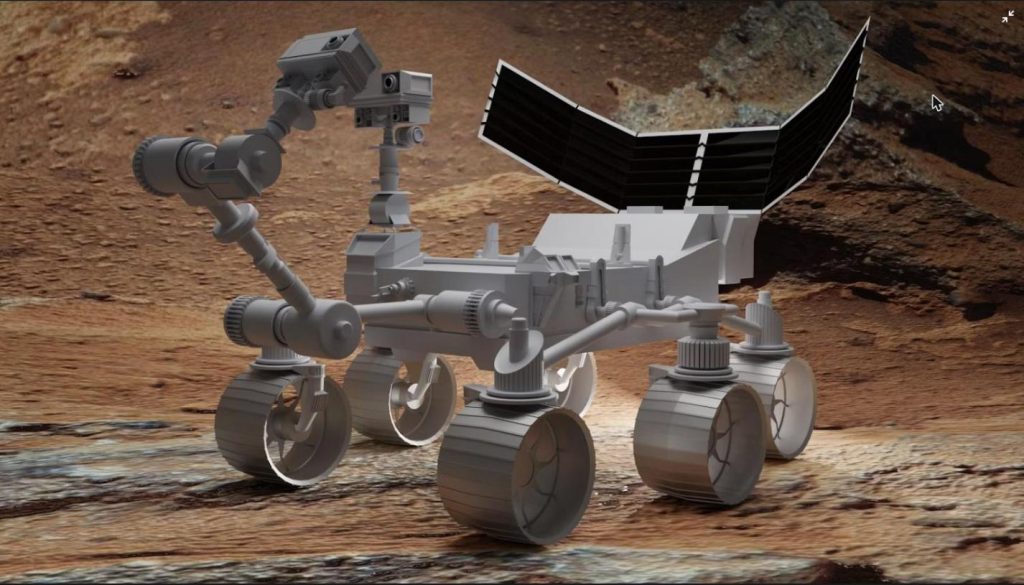

The Perseverance rover Mars driving record is about to be broken. NASA’s car-sized robot is about to make history on Mars, and it has done so almost entirely by teaching itself how to drive. Here are 7 facts about the Perseverance rover Mars driving record and the self-driving technology that made it possible.
Table of Contents
1. Perseverance Is About to Break a 28-Mile Driving Record
Perseverance landed in Mars’ Jezero Crater in February 2021, and this week it will pass 45.16 km (28.06 miles) of total driving distance. That breaks the previous record held by the rover Opportunity, which drove across Mars for nearly 15 years before going silent in 2018. Perseverance reached the same milestone in roughly a third of the time. The rover joins a growing list of headline-grabbing space stories this year, following close behind news of the interstellar comet 3I/ATLAS passing through our solar system.
2. The Secret Is an Onboard Self-Driving Brain
“The real enabling technology has been its auto navigation system,” said Steven Lee, Perseverance’s project manager at NASA’s Jet Propulsion Laboratory. Much like a self-driving car on Earth, the rover uses onboard cameras to scan the terrain ahead, then an onboard computer processes those images to plot the safest path forward, all without waiting for instructions from Earth.
3. About 90% of Its Driving Is Fully Autonomous
Perseverance’s twin rover, Curiosity, has similar cameras and software, but its onboard computer is a full generation older, with some chips dating back to the 1990s. As a result, only about 10% of Curiosity’s driving is autonomous. Perseverance’s more modern Vision Compute Element allows roughly 90% of its driving to happen without human input, letting it think and move at the same time.
4. It Still Isn’t Exactly Fast
Self-driving doesn’t mean speedy. Perseverance’s top wheel speed is only about 150 meters per hour, roughly a tenth of a mile. But because it rarely has to stop and wait for new commands from mission control, it covers far more ground over time than a rover that depends on step-by-step human guidance. Even so, this steady pace is exactly how the Perseverance rover Mars driving record keeps climbing.
5. More Driving Means More Science
“It is very enabling for the science,” said Vivian Sun, the mission’s deputy project scientist. Perseverance is exploring Jezero Crater, home to some of the oldest rocks in the solar system, dating back roughly 4 billion years to an era when large lakes, and possibly oceans, may have covered Mars. Its self-driving range has let scientists study far more of that ancient terrain than earlier missions ever could, often reaching new science sites ahead of schedule.
6. The Wheels Were Redesigned After Lessons From Curiosity
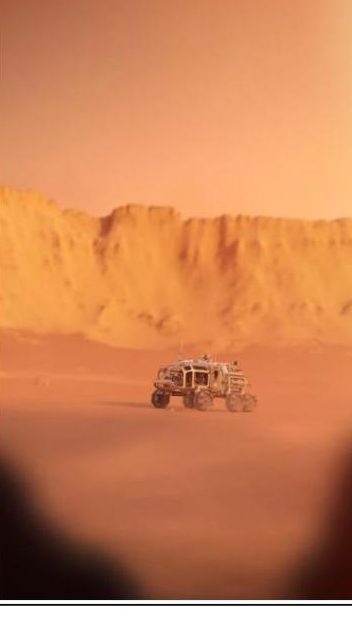
After years on Mars, Curiosity’s wheels showed significant wear and tear. Engineers redesigned Perseverance’s wheels in response, and so far there are no signs of similar damage. The only lingering watch item is the wheel actuators, originally tested for 20 km of driving; NASA is now certifying them for at least 100 km, and possibly much further.
7. It Could Keep Driving for Years to Come
Perseverance runs on a radioisotope power source (RTG) and carries no propellants, consumables, or lubricants that could run out. Combined with its durable wheels and self-driving software, mission engineers say the Perseverance rover Mars driving record could keep growing for many more years.
What Happens Next
As Perseverance keeps rolling through Jezero Crater, the same autonomous navigation system will keep deciding, hour by hour, exactly where it’s safe to go next. It’s a quieter kind of space milestone than a rocket launch, but it’s changing how much of Mars we can actually explore. It’s a reminder that some of the biggest breakthroughs in space right now sit right alongside advances back on Earth, like the record-setting Perseid meteor shower 2026 lighting up our own night sky, or the NSF Inouye Solar Telescope images revealing our sun in stunning new detail.
Frequently Asked Questions
How far has the Perseverance rover driven on Mars?
This week, Perseverance is expected to pass 45.16 km (28.06 miles) of total driving distance, breaking the record previously held by the Opportunity rover, according to Ars Technica and NASA’s Jet Propulsion Laboratory.
How does the Perseverance rover drive itself?
It uses onboard cameras paired with an onboard computer that processes images of the terrain and calculates a safe path in real time, similar in concept to a self-driving car, but built to handle boulders, sand, and Martian slopes instead of roads.
Why is Curiosity slower at self-driving than Perseverance?
The Perseverance rover Mars driving record reflects this gap directly: Curiosity uses an older onboard computer, with some components dating back to the 1990s, which limits how much of its driving can be autonomous to about 10%. Perseverance’s newer Vision Compute Element allows about 90% of its driving to happen without direct human control.
How long could the Perseverance rover keep operating?
There’s no fixed expiration date. Perseverance runs on a radioisotope power source with no consumables to deplete, and its redesigned wheels currently show no significant wear, so mission engineers believe it could keep exploring for years to come.



Pingback: Total Solar Eclipse 2026: 7 Stunning Facts Revealed