
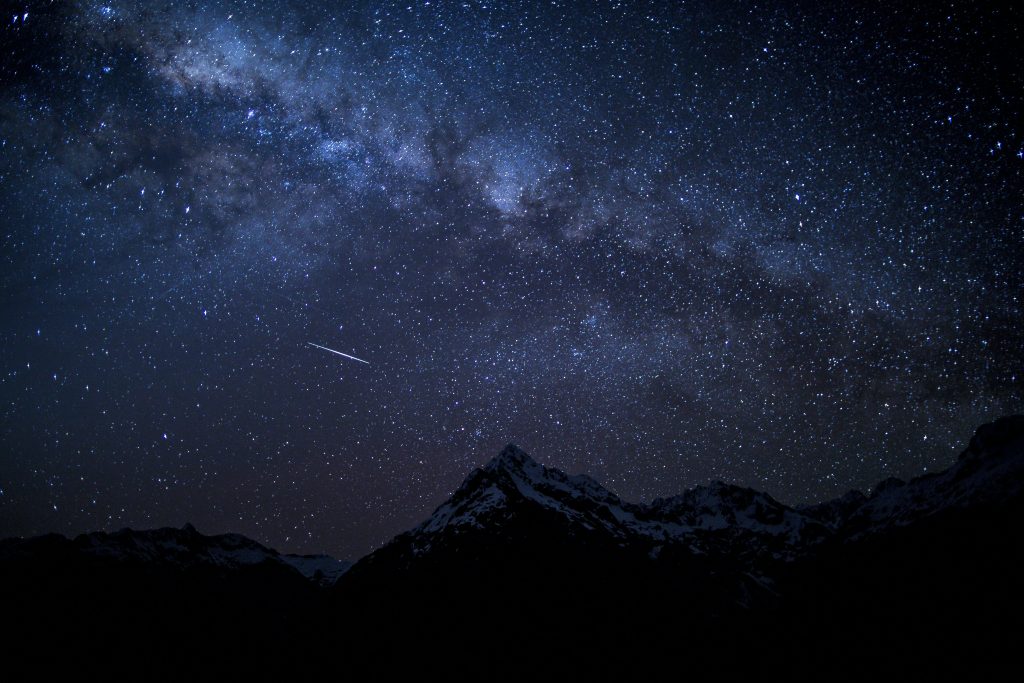

The Perseid meteor shower 2026 is putting on one of its best displays in years this week, and skywatchers across the Northern Hemisphere have a rare shot at seeing dozens of shooting stars an hour without any special equipment. Here’s what’s causing the show, when to look up, and how to get the best view.
Table of Contents
What Is the Perseid Meteor Shower
The Perseids happen every year in mid-August when Earth’s orbit carries it through a trail of dust and debris left behind by Comet 109P/Swift-Tuttle, a giant icy comet that swings through the inner solar system roughly once every 133 years. As those tiny comet fragments slam into the atmosphere at around 37 miles per second, they burn up and create the streaks of light known as shooting stars. The meteors appear to radiate from a point near the constellation Perseus, which is how the shower got its name, and astronomers consider it one of the most active and reliable showers of the entire year.
When to Watch the 2026 Peak
The Perseid meteor shower 2026 peak arrives Wednesday night into Thursday morning, though meteors will remain visible for several nights before and after that window. The best viewing typically falls between midnight and dawn, once the shower’s radiant point has climbed high into the sky. No telescope or binoculars are needed and can actually make it harder to catch the fast-moving streaks; the best approach is simply to lie back, take in as much sky as possible, and give your eyes 20 to 30 minutes to fully adjust to the dark.
Why This Year’s Show Could Be Extra Bright
A new moon is arriving right around the same time as the peak, which means there will be little to no moonlight washing out the night sky. Darker skies make a huge difference for meteor watching, since even a half-lit moon can hide all but the brightest fireballs. Forecasters say the combination of the new moon and clear late-summer skies is giving the Northern Hemisphere especially promising viewing conditions this year.
How Many Meteors You Might See
NASA estimates that observers watching the Perseid meteor shower 2026 under ideal, dark-sky conditions could see as many as 50 to 100 meteors per hour during the peak. The American Meteor Society is a bit more conservative, projecting 30 to 50 meteors per hour for people watching from rural areas away from city lights. Either way, that works out to roughly one shooting star every minute or two, making the Perseids one of the easiest showers to enjoy even for casual, first-time skywatchers.
A Rare Bonus: Eclipse and a Planet Parade
This year’s Perseids are sharing the spotlight with two other rare sky events. A total solar eclipse is sweeping across Spain, Iceland and Greenland around the same week, and a six-planet parade is lining up in the evening sky. Astronomers note that the best meteor viewing will come after the eclipse passes, since the Perseids are a nighttime show while the eclipse plays out during the day.
Best Places and Tips to See It
Getting away from city lights makes the single biggest difference, so a short drive to a rural area or a dark-sky park is worth the effort if you can manage it. Find an open area with a wide view of the sky, avoid checking your phone since the bright screen will ruin your night vision, and be patient, since meteors tend to arrive in short bursts rather than a steady stream. This has already been a big year for skywatchers, from the wearable tech leaks this year to a rare aurora borealis that lit up more than a dozen states earlier this year, and the Perseids add one more reason to look up.
What Happens Next
Meteor activity from the Perseid meteor shower 2026 will keep tapering off through the rest of August as Earth moves out of the comet’s debris trail, though a handful of stragglers can still be spotted for another week or two. Skywatchers looking for the next big show won’t have to wait too long. The NSF Inouye Solar Telescope has also been busy this year capturing the sun’s surface in unprecedented detail, a reminder that some of the best sky-watching stories don’t need a clear night at all.
Frequently Asked Questions
When is the Perseid meteor shower 2026 peak?
The peak falls on Wednesday night into Thursday morning this week, though meteors will be visible for several nights before and after. According to AP News, viewing conditions this year are especially promising for the Northern Hemisphere thanks to a new moon.
What causes the Perseid meteor shower?
The shower happens when Earth passes through a trail of dust and debris left behind by Comet 109P/Swift-Tuttle. Those fragments burn up in the atmosphere at extremely high speeds, creating the bright streaks known as shooting stars.
Do you need a telescope to see the Perseids?
No. The Perseid meteor shower is best seen with the naked eye, since a wide, unobstructed view of the sky works far better than a telescope’s narrow field of view. All you really need is a dark location, a bit of patience, and roughly 20 to 30 minutes for your eyes to adjust.
How many meteors can you expect to see?
NASA estimates up to 50 to 100 meteors per hour under ideal, dark-sky conditions, while the American Meteor Society projects a more typical 30 to 50 per hour from rural viewing spots away from city light pollution.



Pingback: Perseverance Rover Mars Driving Record: 7 Stunning Facts
Pingback: Total Solar Eclipse 2026: 7 Stunning Facts Revealed