

Introduction
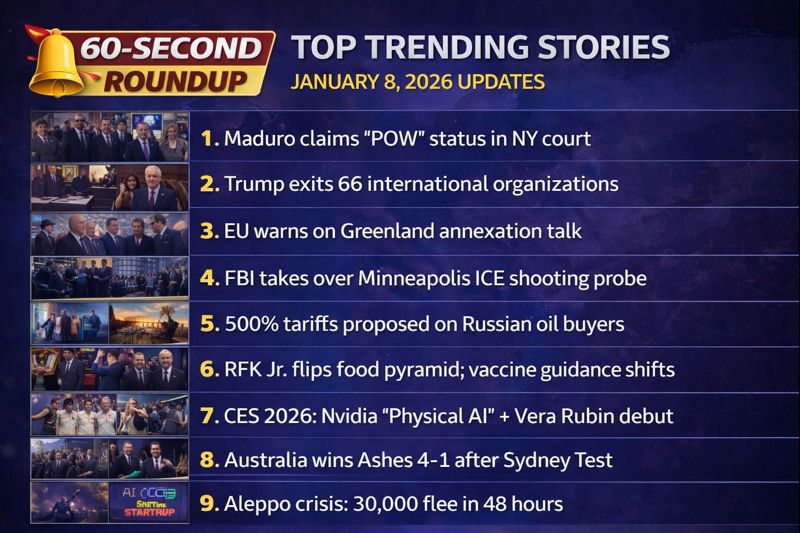
Top Trending News on January 8, 2026 is being shaped by a rare collision of courtroom drama, alliance stress, and fast-moving domestic unrest. In New York, Nicolás Maduro’s legal team is testing a high-risk “prisoner of war” framing that could force U.S. courts into rarely litigated immunity terrain. Reuters+1 At the same time, the Trump administration’s decision to withdraw the United States from 66 international organizations is jolting diplomatic networks that usually move slowly. Reuters+2The White House+2
Meanwhile, a fatal shooting tied to an ICE operation in Minneapolis is escalating into a credibility crisis as federal authorities seize control of evidence, fueling protests and intensifying scrutiny of enforcement tactics. AP News+2MPR News+2 And at CES 2026, Nvidia’s push toward “Physical AI” is dominating the tech agenda—because the next phase of AI isn’t just chatbots, it’s machines that move through the real world. NVIDIA Blog+1
1) Maduro’s “prisoner of war” strategy puts immunity in play
Maduro’s not-guilty plea is now paired with a legal argument that could reshape the case: a bid to frame him as a “prisoner of war” and press claims of sovereign immunity protections. Reuters has described this as a test of U.S. power to prosecute foreign leaders—an area U.S. courts rarely litigate in criminal trials. Reuters+2Reuters+2 The next major hearing remains scheduled for March 17, 2026, making the weeks ahead a legal chess match over jurisdiction and precedent. Reuters+1
Venezuela operation explainer:
https://theviralminute.com/what-happened-in-venezuela-us-strikes-and-capture-of-president-maduro/
2) Trump withdraws the U.S. from 66 international bodies
The White House and major outlets report the U.S. is exiting 66 international organizations, including UN-linked entities and the UNFCCC, intensifying claims of a broader retreat from multilateral cooperation. Reuters+2The White House+2 Critics warn the move reduces U.S. influence in rule-setting institutions; supporters argue it reclaims policy autonomy. The Guardian+1
3) Greenland tensions rise as Europe hardens its stance
Renewed U.S. interest in Greenland is no longer treated as political theater in European capitals. Reuters reports active planning among allies over how to respond if U.S. pressure escalates. Reuters+1 Another Reuters report says the administration has even weighed financial incentives to sway Greenlanders—an approach European officials see as destabilizing. Reuters
4) Minneapolis ICE shooting: FBI control becomes the story
In Minneapolis, the investigation into the fatal ICE-related shooting has shifted from tragedy to institutional conflict. AP and MPR report that state investigators were pushed out and federal authorities took control of evidence access—fueling protests and deepening mistrust. AP News+2MPR News+2 ABC News reports DHS leadership has defended the agent’s actions and framed the situation as a threat to officers, while local officials dispute key details. ABC News+1
Viral dynamics behind breaking-news amplification:
https://theviralminute.com/social-media-viral-trends-2026-whats-driving-reach-right-now/
5) 500% tariffs on Russian oil buyers: markets brace for blowback
A proposed sanctions approach targeting buyers of Russian oil—described as 500% tariffs—is triggering concern in major importing economies. Fox News and India’s Times of India report the measure is aimed at increasing pressure on Moscow by targeting downstream purchasers such as India and China. Fox News+1 Even if implementation details evolve, the headline risk is real: energy prices react not just to supply, but to enforcement and escalation signals. Reuters+1
6) RFK Jr.’s food guidance and CDC vaccine schedule changes shake health policy
New federal dietary guidance is drawing intense scrutiny. Scientific American reports the revised framework encourages more saturated-fat-rich foods such as red meat and full-fat dairy—an abrupt departure from decades of public-health messaging. scientificamerican.com Separately, HHS posted a statement outlining changes to how CDC organizes immunization recommendations (including categories for high-risk and shared decision-making). HHS
7) CES 2026: Nvidia’s “Physical AI” takes center stage
At CES, Nvidia’s own recap highlights its Rubin platform and a push toward AI that acts in the physical world—robotics, autonomy, and real-time decision loops. NVIDIA Blog Samsung’s CES announcements—anchored by a 130-inch Micro RGB TV—show how quickly “AI-first” is becoming a default consumer product pitch. Samsung Global Newsroom+1
Daily AI briefing:
https://theviralminute.com/daily-ai-news-your-indispensable-tech-briefing-for-january-1-2026/
8) Australia reclaims the Ashes with a 4–1 statement
Reuters reports Australia sealed a 4–1 Ashes series win after taking the fifth Test by five wickets—closing the tour with a decisive result that will frame cricket debates through 2027. Reuters+1
9) Aleppo displacement surges as fighting intensifies
A worsening situation in Aleppo is driving urgent humanitarian concern. Reuters reports renewed strikes and heavy fighting have sent thousands fleeing Kurdish-majority areas, while AP describes displacement across the province reaching far larger totals as violence expands. Reuters+1 ReliefWeb updates also flag operational disruptions and transport impacts in the region. ReliefWeb
10) “Vibe coding” accelerates the AI-first startup cycle
“Vibe coding”—building products by describing intent while AI generates the code—has moved from niche to mainstream tech conversation. Forbes frames it as an emerging small-business advantage, while industry coverage highlights how it can compress product timelines and lower barriers for solo builders. Forbes+1 The broader consequence is strategic: if software becomes easier to ship, distribution and trust become the real moats.
What happens next
- Maduro case: immunity arguments could become a precedent-setting phase before the March hearing. Reuters+1
- Multilateral exits: watch which agencies lose funding first and how allies adjust coordination. The White House+1
- Greenland: diplomatic meetings and any concrete policy steps will define escalation risk. Reuters+1
- Minneapolis: evidence access and transparency will shape public confidence as protests continue. AP News+1
- Energy: enforcement actions at sea and tariff threats could reprice geopolitical risk. Reuters+1