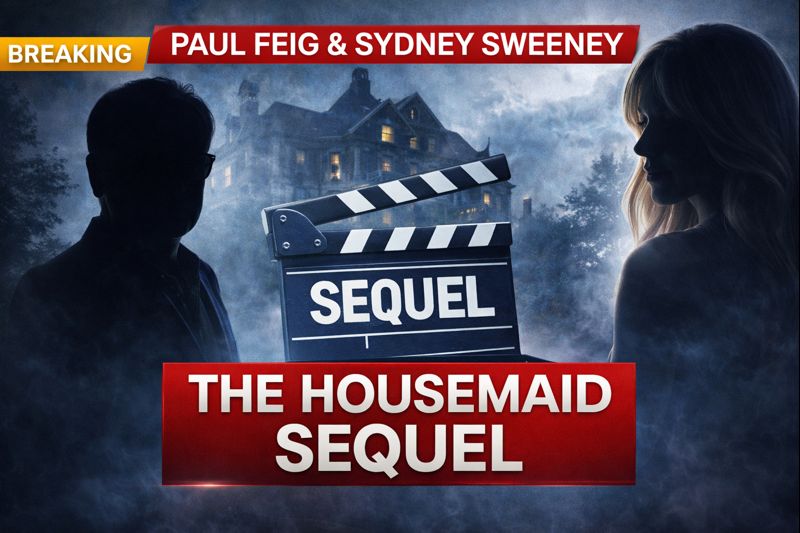

Paul Feig is trending today for a simple reason: the box-office thriller The Housemaid is getting a sequel, and his return signals clear franchise intent. Lionsgate has moved to develop The Housemaid’s Secret, the follow-up based on Freida McFadden’s bestselling novels, with plans to reunite Feig with star Sydney Sweeney and screenwriter Rebecca Sonnenshine.
This isn’t just fan service. It’s an industry data point. A mid-budget psychological thriller released at the holidays has broken through the noise, converted social buzz into ticket sales, and now appears positioned to become a repeatable franchise. That combination—speed, scale, and audience energy—is exactly what studio executives chase in a crowded release calendar.
Below is what we know, what’s been confirmed, and what this moment tells us about where mainstream cinema is heading in 2026.
Key facts at a glance
- Who is trending: Paul Feig
- What’s driving it: A sequel to The Housemaid titled The Housemaid’s Secret is in development
- Lead returning: Sydney Sweeney is expected to return and remain involved as an executive producer
- Creative team: Paul Feig returning as director/producer; Rebecca Sonnenshine returning as writer
- Source material: Freida McFadden’s second book in the trilogy
- Why it matters: A mid-budget thriller is scaling into a franchise on fast turnaround economics
Why Paul Feig is trending right now
When a filmmaker’s name spikes in search, it’s usually tied to one of three things: a major announcement, a big opening weekend, or a controversy. In Paul Feig’s case, it’s the cleanest kind of trend: a sequel greenlight that arrived quickly after a strong commercial result.
Feig is widely known for comedy and star-led studio films, but The Housemaid has pushed him into a slightly different lane—slick, twist-forward psychological thriller with a satirical edge. Reviews emphasized the movie’s tonal balancing act and its ability to blend camp and menace without collapsing into parody.
A sequel announcement isn’t surprising in isolation. What’s unusual is the timing: Lionsgate confirmed development roughly two and a half weeks after release, a sign the studio believes it has a genuine audience engine, not just a lucky opening.
The Housemaid’s box-office breakout: what the numbers say
Hollywood loves narratives, but it funds decisions with math. The math here is straightforward: The Housemaid reportedly grossed over $75 million domestically and about $133 million worldwide in its first 17 days, against a $35 million production budget.
For studios, that’s the sweet spot:
- The budget is controlled enough to limit downside.
- The premise is accessible enough to generate broad interest.
- The “twist” factor invites word-of-mouth and repeat viewing.
- The cast is recognizable but not so expensive that profit evaporates.
Lionsgate explicitly pointed to social media buzz and audience enthusiasm as key factors in moving quickly on the sequel. That matters because it signals how studios are measuring demand in real time: not just ticket revenue, but the speed of conversation online.
What is The Housemaid’s Secret?
The Housemaid’s Secret is the planned sequel and is based on the second installment of Freida McFadden’s series. Lionsgate’s announcement frames it as a continuation of the story built around Sydney Sweeney’s character, with the creative team returning to keep tone and pacing consistent.
The naming choice is also strategic. Studios love clear brand continuity:
- The Housemaid (the hook)
- The Housemaid’s Secret (the escalation)
- A third title already exists in the book series, which creates a roadmap for a trilogy if audience demand holds.
If you’re trying to understand why Paul Feig is trending, this is the heart of it: the sequel isn’t being treated like an optional add-on. It’s being treated like the next chapter in a planned arc.
Netflix House vs Paramount: The Billion-Dollar Experiential Battle
https://theviralminute.com/netflix-house-vs-paramount-experiential-entertainment/
Who’s returning: Sydney Sweeney, Paul Feig, and the team
The sequel plan is built around the idea that the core team returns. That includes:
- Paul Feig as director/producer
- Sydney Sweeney reprising her role and staying involved as an executive producer
- Rebecca Sonnenshine writing the sequel
- Freida McFadden continuing as an executive producer on the adaptation
This is a classic franchise play: keep the creative DNA consistent so the sequel feels like the same “product” to audiences, while still leaving room to raise stakes.
What about Amanda Seyfried?
Amanda Seyfried’s role in the original is part of why the casting felt premium: she brings a specific mix of warmth and unpredictability that suits thrillers. In separate remarks around the sequel conversation, Seyfried has said she would like to return—even if only as a cameo—and expressed confidence that follow-ups will happen.
That’s notable because it suggests the studio and talent are already thinking beyond a single sequel. When actors talk about “sequels” in plural, it’s often because they’ve seen outlines, heard studio intent, or feel the market demand.
What made The Housemaid work—and why that matters for 2026
To understand why Paul Feig is trending, you have to understand what the film represents in 2026: a mid-budget studio movie that behaves like a modern franchise seed.
1) The return of the “fun thriller”
Critics framed The Housemaid as twisty, self-aware, and built for an audience that wants tension without the emotional heaviness of prestige drama. That tone is important. It’s entertainment designed to be talked about, memed, and debated—without needing a long cultural ramp.
2) Social conversation as a release strategy
Lionsgate credited social media momentum in its decision to move quickly on the sequel. Translation: the marketing didn’t end on opening weekend; it continued through fan edits, reaction videos, “ending explained” threads, and the kind of word-of-mouth that algorithms reward.
3) Star power with modern reach
Sydney Sweeney’s celebrity is unusually cross-platform. She’s both a film star and an internet-native figure whose projects generate conversation beyond traditional entertainment media. The sequel announcement also landed as a narrative turnaround after a previous film’s poor performance, reinforcing the sense that The Housemaid is her commercial reset button.
The Paul Feig factor: tone, pacing, and franchise confidence
Paul Feig’s presence matters because thrillers live or die by execution. A twist is only as good as:
- how the story hides it,
- how the film sets expectations,
- and how the reveal lands emotionally.
Feig’s reputation is that he can manage tone—keeping a movie sharp, energetic, and audience-friendly even when the material veers dark. Reviews highlighted that tonal control, describing the film as both satirical and violent, threaded with self-aware humor.
That’s precisely the kind of skill that supports a franchise. Sequels raise stakes; they also raise the risk of tone drifting into absurdity. If Lionsgate wants a trilogy, it needs a director who can keep each installment coherent.
CES-era AI culture meets studio economics: why the timing feels right
In 2026, attention moves fast. Studios treat online conversation as a real-time signal, so sequel decisions happen while the first film is still trending. The Housemaid’s rapid follow-up shows Lionsgate betting that momentum—plus Paul Feig’s brand—can carry audiences straight into the next chapter.
What we know about production timing
Lionsgate has indicated the sequel is being developed with production expected to begin in 2026. Reporting around the announcement points to a fast turnaround approach.
A few practical implications follow:
- Returning a director and writer speeds up development because the style guide already exists.
- Returning the lead actor keeps marketing simple: the face of the franchise remains stable.
- Adapting an existing bestseller provides an outline that reduces story risk.
This is the modern studio playbook for mid-budget hits: treat them like scalable IP, not one-off films.
Plot expectations without spoilers: what the sequel likely leans into
Because the sequel is based on a known book, the general direction is already built into the source material. But even without spoilers, you can infer what the studio will likely emphasize:
- A deeper mystery: sequels need a hook beyond “the first one, again.”
- A stronger emotional engine: audiences return for characters, not just twists.
- More world-building: the story’s social setting—wealth, power, secrecy—gives the franchise a recognizable “arena.”
- A bolder set of reveals: sequels often increase shock value to justify existence.
Paul Feig’s approach will likely keep the tone accessible, meaning the sequel can still play to a broad audience rather than being boxed into niche thriller territory.
Why this sequel is a bigger signal than it looks
A) Mid-budget movies aren’t dead—they’re evolving
For years, the industry narrative said mid-budget films were disappearing, squeezed between mega-franchises and streaming. The Housemaid is evidence that mid-budget can still thrive if it:
- has recognizable IP,
- launches with strong marketing hooks,
- and triggers online discussion that keeps it alive after week one.
B) The studio wants repeatable profit, not just prestige
A controlled-budget thriller that can generate a trilogy is exactly what studios want in a volatile market. One $200 million gamble can sink a slate. A few $35 million hits can stabilize it.
C) Star-driven thrillers are becoming a lane again
Sweeney and Seyfried give the franchise a dual-audience pull: younger viewers who follow Sweeney’s projects closely, and older audiences who value established star credibility.
How fans are reacting—and why the internet accelerates sequels
The trending chart for “paul feig” doesn’t rise because moviegoers suddenly became auteurs. It rises because modern fandom is participatory. Fans react to:
- casting confirmations,
- title reveals,
- cameo hints,
- and any hint of a timeline.
Seyfried’s public enthusiasm, even framed as a possible cameo, becomes an engagement engine. It creates a second wave of conversation: not just “sequel confirmed,” but “who’s coming back?”
This is how entertainment stays in feeds: micro-updates, discussed loudly.
Alix Earle and Tom Brady Spark Viral Frenzy After St. Barths Sighting
URL: https://theviralminute.com/alix-earle-and-tom-brady-spark-viral-frenzy-after-st-barths-sighting
Paul Feig’s career pivot: why this thriller lane matters
Paul Feig’s public brand was built on sharp, star-led comedy, so his leap into a twist-heavy psychological thriller has stood out. It helps explain why his name is trending alongside Sydney Sweeney’s: the sequel isn’t being framed as “more of the book,” but as “more of the movie that Feig made.” That distinction matters in franchise-building. When a director becomes part of the product, audiences expect a consistent tone, tempo, and visual language—and studios can market a sequel as a continuation rather than a reset.
The craft challenge in a film like The Housemaid isn’t simply inventing surprises. It’s controlling rhythm. Thrillers need quiet moments so the spikes feel sharp, and they need performances that can carry secrets without turning the story into a guessing game too early. Reviews of the first film highlighted how the movie balanced self-aware humor with genuine menace, a tonal tightrope that can easily fall into parody.
That’s why Lionsgate’s “returning team” strategy is meaningful. Sequels often fail when they copy surface elements—similar plot beats, similar twists—without reproducing the underlying pacing and emotional texture. Feig returning suggests the studio wants continuity at the level that viewers actually feel.
Why audiences showed up: three hooks that traveled globally
Box-office breakouts rarely come from a single factor. In the case of The Housemaid, three hooks appear to have traveled well across markets.
First, the premise is instantly readable. A young woman takes a job inside a wealthy household, and the situation is not what it seems. You don’t need prior lore, and you don’t need a franchise encyclopedia. That makes it highly exportable.
Second, the casting sells tension. Sydney Sweeney brings modern star pull and online heat, while Amanda Seyfried’s presence signals prestige credibility. The pairing allows different audiences to enter the story from different doors.
Third, the twist culture is built in. Modern audiences love “talkable” endings. A movie that invites debate—what did I miss, and who was manipulating whom—creates a second life online that can be as valuable as paid marketing. Lionsgate has explicitly credited social buzz and audience enthusiasm, which reads like a studio acknowledging that conversation is part of the distribution system now.
The Lionsgate play: building franchises from mid-budget hits
For Lionsgate, greenlighting The Housemaid’s Secret is also a business statement. The studio has long leaned into accessible concepts that can become repeatable brands, and this one comes with a built-in roadmap: a trilogy of books with proven sales and escalating stakes.
The economics are attractive. A controlled budget gives flexibility on release timing, marketing intensity, and casting. If the sequel performs like the first, the studio can scale up. If it underperforms, the downside is more manageable than a tentpole collapse. In 2026, with studio slates squeezed by fewer and more expensive blockbusters, that risk balance is part of why mid-budget thrillers are quietly regaining power.
What to watch next: four updates that will move the story
If you’re tracking why “paul feig” and “The Housemaid sequel” keep climbing in search, these are the next milestones that usually spike attention:
- Casting confirmations: whether Seyfried appears, and how the supporting cast evolves.
- Production signals: location news, scheduling, and set photos that confirm cameras are rolling.
- A release window: a holiday slot again would suggest Lionsgate believes the audience behavior is repeatable.
- Book three talk: public references to the third novel often indicate a longer franchise plan.
For now, the headline stays simple: a proven audience has given Lionsgate the confidence to move quickly, and Paul Feig’s return anchors the sequel as continuity, not reinvention.
Where Paul Feig goes from here
If The Housemaid becomes a trilogy, Feig gains something rare: a franchise identity that sits outside superhero, fantasy, or legacy IP. That positions him well in a market where studios want repeatable brands but audiences are tired of sameness.
It also resets the conversation around what he does best. He can be a comedy brand, yes, but he can also be a director who makes mainstream, twisty entertainment that sells globally.
Frequently asked questions
Is Paul Feig confirmed to return for the sequel?
Yes. Reporting around Lionsgate’s sequel development indicates Paul Feig is returning, with Sydney Sweeney and writer Rebecca Sonnenshine also attached.
What is the sequel called?
The sequel in development is titled The Housemaid’s Secret.
Is Sydney Sweeney returning?
The sequel is being developed with Sydney Sweeney returning and continuing as an executive producer.
Will Amanda Seyfried be in The Housemaid’s Secret?
Amanda Seyfried has said she would like to return, even in a cameo, but the extent of her involvement has not been confirmed as a central role.
Why did Lionsgate move so fast on a sequel?
The studio pointed to box-office performance and social buzz, suggesting it sees strong audience demand and a chance to build a franchise quickly.
When will The Housemaid’s Secret be released?
A release date has not been officially set, but reporting indicates development is underway with production expected to begin in 2026.
The takeaway
Paul Feig is trending because The Housemaid isn’t being treated like a one-off thriller—it’s being turned into a franchise while the audience is still engaged. With Lionsgate developing The Housemaid’s Secret, Feig’s return matters as a promise of continuity: same tone, same pacing, same twist-driven entertainment that broke through the holiday box office.
In 2026, the most valuable movies aren’t always the biggest. They’re the ones that can scale—fast—without losing the audience that made them a hit in the first place.
https://apnews.com/article/157a777a7fa309f1418ffe9a504d1df8
Adam Peaty & Holly Ramsay: How the Olympic Star’s Romance Began
URL: https://theviralminute.com/adam-peaty-and-holly-ramsay-olympic-swimmers-romance-with-gordon-ramsays-daughter