
Intro: The NFL is still king—your remote just isn’t
On paper, the NFL’s January calendar is simple: the regular season ends, the postseason begins, and the league’s biggest games dominate every conversation. In practice, many fans are learning a new reality in 2026: watching the NFL has become a multi-app hunt. One game is on broadcast TV, the next is tied to a streaming exclusive, and the next requires a bundle you didn’t even know existed until kickoff is minutes away.
That fragmentation isn’t just annoying. It’s reshaping how the sport is consumed, how highlights spread, and how money moves across media. A playoff game that used to be an “everyone’s watching” national event can now become an “only subscribers saw it live” moment—followed by a tidal wave of clips on social platforms and group chats. That ripple effect changes everything from ad pricing to betting behavior to the way fans talk about stars, coaches, and controversies.
If you’re trying to keep up this postseason—whether you’re in the U.S., watching from the UK, or following from MENA—this guide breaks down what’s happening, why it’s happening, and how to watch smarter. For the wider trend context, see how recommendation engines and retention signals are driving modern distribution in our explainer on Social Media & Viral Trends 2026.
Key facts at a glance
- Who: NFL fans, broadcasters, streamers, advertisers, sports bars, and leagues that copy the model
- What: A rights landscape where national games are split across broadcast, cable, and multiple streaming platforms
- When: January 2026, as Wild Card Weekend and the run to the Super Bowl ramp up
- Where: U.S. rights drive the ecosystem, but global viewers feel the impact via highlights, social distribution, and regional packages
- Why it matters: Fragmentation changes audience size, social virality, pricing power, and the economics of “must-see” sports
What changed in NFL streaming 2026—and why fans feel it now
The NFL didn’t suddenly decide to confuse everyone. The league followed the money—specifically, the money in subscription growth, platform stickiness, and data. A single exclusive game can move the needle for a streaming service in a way a shared broadcast can’t. It creates a clear incentive: paywalls become “events,” and events become customer acquisition.
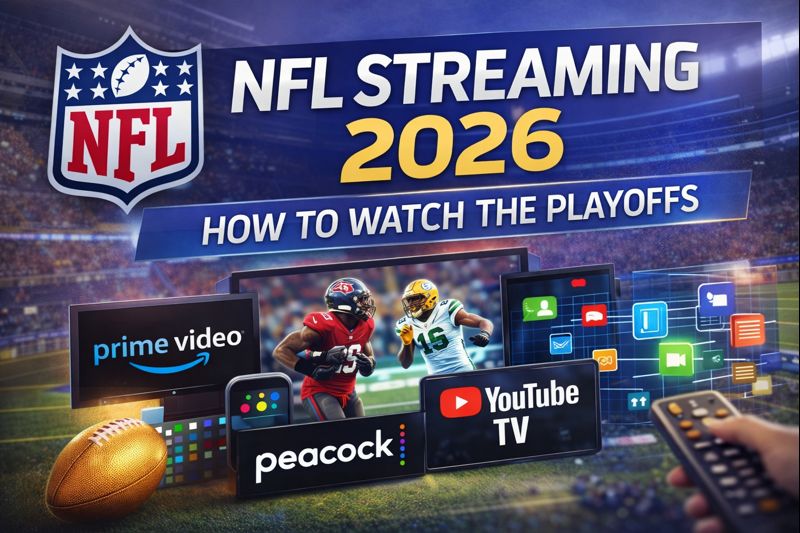
The result is a viewing landscape where different platforms specialize in different slices of the schedule. Sunday Night Football, for example, is closely tied to NBC and Peacock’s streaming offering, which also promotes postseason coverage. peacocktv.com Amazon’s Prime Video leans into Thursday Night Football as an exclusive home for that package, building a consistent habit week after week. Amazon+1 YouTube TV’s NFL Sunday Ticket, meanwhile, positions itself as the most direct answer to the “I want every out-of-market Sunday game” problem. YouTube TV+1
For fans, the lived experience is simple: you’re not paying for “the NFL.” You’re paying for access to different doors that open at different times.
Why the playoff window is the pressure test
Regular season fragmentation is inconvenient; playoff fragmentation is a cultural flashpoint. January games carry higher stakes, higher emotion, and higher social volume. A missed fourth-quarter comeback doesn’t just feel like missing a game—it feels like missing the national conversation.
That’s why Wild Card Weekend schedules get scrutinized like policy documents. The NFL’s own announcements about postseason scheduling have become required reading for fans trying to plan viewing parties and budgets. NFL.com
The streaming map: where NFL games live right now
Below is the most practical way to think about watching NFL in 2026: start with the “anchors,” then build around your needs.
1) Broadcast anchors: FOX, CBS, NBC
Broadcast networks remain the most accessible path for many viewers. If you have an antenna, you can still catch a meaningful portion of games. The problem is that “meaningful portion” is not “everything,” and the highest-profile moments increasingly cross into streaming territory.
2) Peacock and the rise of the exclusive national window
Peacock is no longer just a companion app. It has become a place where the NFL tests exclusivity—including special standalone games and postseason packaging. Peacock’s own NFL hub highlights Sunday Night Football streaming and postseason rounds in January 2026. peacocktv.com The strategy is clear: convert casual viewers into subscribers by turning a single game into a sign-up moment.
3) Prime Video’s Thursday habit
Prime Video’s Thursday Night Football package shows the power of consistency: the same night, the same platform, the same user behavior. Amazon’s TNF pages emphasize exclusivity and ease of access for Prime members. Amazon+1 For fans, that’s the least confusing piece of the puzzle—until you realize the rest of the week doesn’t work the same way.
4) YouTube TV and NFL Sunday Ticket
For out-of-market Sunday games, Sunday Ticket has become a major pillar for die-hard fans, with YouTube TV positioning it as the most live NFL action “in one place.” YouTube TV+1 It doesn’t solve every playoff problem, but it does reduce the regular-season chaos for fans who follow multiple teams or fantasy lineups.
5) ESPN’s Monday Night footprint—and the bundle effect
ESPN remains the default for Monday Night Football scheduling and presentation. ESPN.com But the bigger story is bundling: streaming platforms are increasingly packaging sports access to reduce churn and raise average revenue per user. Even when fans don’t love the model, the business logic is hard to fight.
Regional reality check: US viewing rules aren’t global viewing rules
If you’re outside the United States, the best answer to “where to watch” is often simpler: NFL Game Pass on DAZN. NFL.com’s regional “Ways to Watch” pages for the UK and for the Middle East and North Africa point fans to DAZN as the home of NFL Game Pass, with access to preseason, regular season, and postseason games. NFL.com+1 That matters because it restores the thing U.S. viewers are losing: one subscription that feels close to “every game.”
But even international viewers are pulled into the U.S. fragmentation story, because the conversation is global. A Ravens–Steelers rivalry clash or a Cowboys–Giants primetime game can trend worldwide even when local broadcast rights differ. The cultural product isn’t just the live broadcast; it’s the meme cycle, the fantasy ripple, and the highlights that dominate feeds within minutes. And the more the NFL pushes toward streaming-first distribution, the more “watching” becomes a mix of live viewing plus delayed social consumption.
In practical terms: if you’re in the UK or MENA and you want an all-in-one path, start with DAZN’s Game Pass ecosystem. If you’re in the U.S., start with your local broadcast map and then plan for the postseason platforms. Either way, treat the schedule like a checklist, not a vibe—before your first kickoff.
The new economics: why exclusives are worth the backlash
Sports rights have become one of the few things that reliably drive live, appointment viewing. That’s priceless for advertisers and platforms in an on-demand world. When a streamer lands exclusive rights, it gains:
- Subscriber acquisition (a measurable bump tied to a single date)
- First-party data (who watched, when they paused, what they clicked next)
- Habit formation (sports as a weekly routine, not a one-off)
- Pricing power (the ability to raise rates without losing every customer)
The NFL gains leverage by diversifying partners. Instead of one network dictating terms, multiple bidders push prices up. Fans pay the cost—sometimes literally.
A recent example of the attention economy’s stakes: Christmas Day streaming records in 2025 showed how massive audiences can be when distribution aligns with the moment, including global reach beyond U.S. TV norms. AP News Those numbers encourage platforms to keep chasing “exclusive” or “first-to-stream” bragging rights.
How fragmentation changes fandom: highlights, spoilers, and the “two timelines” problem
When everyone watches the same game on the same channel, culture is synchronized. In 2026, many big games produce two timelines:
- Timeline A: people who watched live
- Timeline B: people who experienced the game through clips, group chats, and second-screen recaps
That split matters. It changes which moments go viral (short, clear, meme-able plays dominate) and which moments get lost (slow-building drives, trench battles, defensive disguises). It also changes how athletes are judged. A quarterback’s best throw might be a “small window” completion that doesn’t clip well. A flashy scramble, even if it ends in a punt, can own the internet for a day.
If you want to see how this works in practice, look at the way game guides are now written—not just to inform, but to catch search spikes tied to availability and last-minute updates. Our own Saints vs Titans streaming guide is built around the exact questions fans type when they’re trying to watch in real time.
Sports bars and public viewing get squeezed
Fragmentation doesn’t hit everyone equally. Households can subscribe to multiple apps. Sports bars operate under commercial licensing and equipment constraints. Every additional platform means additional costs, logins, and failure points. That’s one reason you’ll see more bars advertising which games they can show—and more fans calling ahead before they show up.
What it means for stars: why Lamar Jackson discourse is different online
When a superstar is trending, it’s not always because of the box score. It’s because of the distribution of the story. A Lamar Jackson spin move can spread faster than a coach’s fourth-down decision because video is the new headline. The lesson is bigger than one player: in the modern NFL, fame is shaped as much by platform mechanics as by performance.
This is where tech and sports collide. Recommendation systems reward retention. That pushes clips that keep users watching, rewinding, and sharing. The Viral Minute In other words, your highlight feed is being optimized—quietly—for engagement, not for “most important football detail.”
How to watch smarter: three plans that fit most fans
Instead of listing every service under the sun, it helps to choose a strategy.
Plan A: The “antenna + one streamer” approach
Best for: casual fans who want the biggest games with minimal spend.
- Use an antenna for local broadcast games.
- Pick one streamer based on your viewing habits (Peacock for SNF/postseason windows, Prime for TNF, etc.). peacocktv.com+1
Plan B: The “team-first” approach
Best for: fans who follow one team closely.
- Prioritize local channels and the platform most likely to carry your team’s national windows.
- Add a flexible option when your team hits a streaming exclusive.
- If you’re often out-of-market, consider Sunday Ticket for the regular season. YouTube TV+1
Plan C: The “all-in postseason” approach
Best for: playoffs-only viewers who want every minute live.
- Confirm the Wild Card schedule and platform assignments early.
- Build a temporary subscription stack for January, then cancel what you don’t need.
- Don’t forget login testing—nothing ruins a party like troubleshooting at kickoff. NFL.com
Context & impact: what changes next for the league, media, and fans
Economic impact
The league’s rights fees rise when partners compete. Platforms justify that spend with subscriber growth and ad sales. Fans see higher costs and more complexity, which can increase churn—but only if there’s a true substitute for live NFL. Right now, there isn’t.
Social and cultural impact
When distribution fragments, the shared civic feeling of big games can weaken. But social platforms partially rebuild it by turning highlights into the common language. The NFL becomes more “always on,” less tied to a single broadcast moment—especially for younger fans who treat the game as a stream of clips.
Industry reaction
Broadcasters are adapting with simulcasts, alternate feeds, and integrated betting graphics. Streamers push product features like multiview and key-play recaps because they know sports viewers care about speed and clarity, not endless menus. YouTube TV
What changes next
The trend line points toward more experimentation: more standalone games, more international distribution twists, and more partnerships with platforms that can prove global scale. The risk is fan fatigue; the opportunity is a larger worldwide audience that follows the NFL the way it follows global soccer—through a blend of live viewing and social distribution.
What happens next: scenarios for 2026–2027
- More exclusives, but clearer navigation: the league could push more games to streamers while building better scheduling tools and in-app discovery.
- Bundles become default: platforms may bundle sports access across services to reduce churn, creating “sports passes” that feel like cable—just with different logos.
- Highlights get licensed harder: as clips drive attention, leagues and platforms could tighten rules on who can post what, when, and where.
- Global growth accelerates: streaming makes international access easier in some regions, even as U.S. rights get more complex.
FAQs
1) Why is NFL streaming 2026 so fragmented?
Because the NFL sells different packages to different partners, and streamers pay for exclusivity to drive subscribers and data. Amazon+1
2) What’s the easiest way to watch most games without cable?
Combine local broadcast access (antenna) with one primary streamer, then add temporary subscriptions during playoffs as needed.
3) Does NFL Sunday Ticket include playoff games?
Sunday Ticket is designed for out-of-market Sunday regular-season games; playoff availability depends on the separate broadcast and streaming rights for each game. YouTube TV+1
4) Are Peacock exclusive NFL games becoming normal?
Peacock has positioned itself as a home for Sunday Night Football streaming and has carried exclusive windows, including postseason coverage highlighted in its NFL hub. peacocktv.com+1
5) Where can I find the official playoff schedule quickly?
NFL.com’s announcements and schedule pages remain the most direct official source for dates, times, and broadcasters. NFL.com
6) Why do highlights go viral faster than full-game analysis now?
Because recommendation systems reward watch time and shareability, which favors short clips and clear moments over nuanced strategy. The Viral Minute
7) What’s the best way to avoid spoilers?
Mute team keywords on social platforms, delay opening group chats during games, and watch on the smallest possible delay—streaming can lag behind broadcast.
Conclusion: the NFL is building the future—fans have to navigate it
NFL streaming 2026 is not just a tech story and not just a sports story. It’s a cultural infrastructure shift. The league is maximizing rights value, streamers are maximizing retention, and fans are stuck building personal viewing strategies to keep up. The good news is that once you know the map, you can plan around it—and spend more time watching football than chasing logins.