
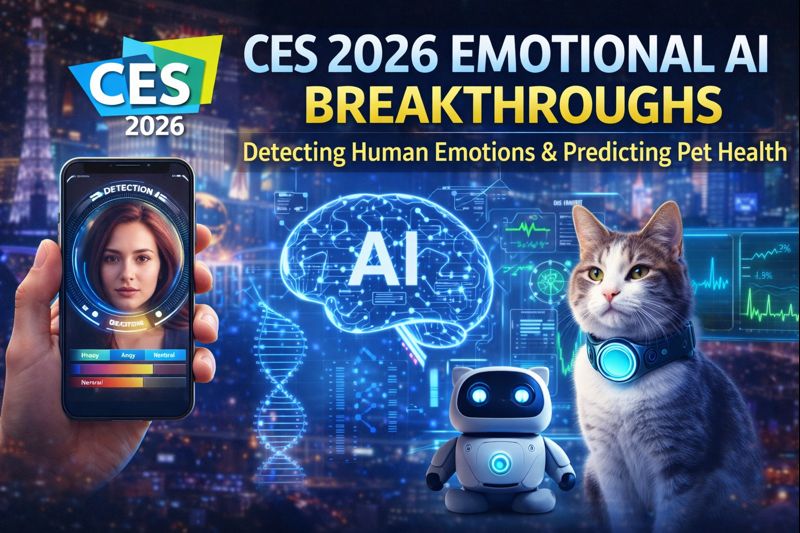

CES 2026 previews emotional AI breakthroughs, from emotion-detecting tools to pet health prediction. Here’s why this technology could redefine consumer tech.
Introduction: Why CES 2026 Feels Different
At CES 2026 in Las Vegas, artificial intelligence is no longer just about speed, automation, or efficiency. This year, the spotlight is on something far more intimate: emotion. As startups and major tech players unveil tools capable of detecting human feelings, interpreting behavioral signals, and even predicting pet health, the conversation around AI has shifted from what machines can do to how machines understand living beings.
This evolution matters right now. Consumer technology has reached a saturation point—devices are powerful, software is fast, and incremental upgrades no longer excite users the way they once did. Emotional AI promises a new frontier, one where technology responds not just to commands, but to context, mood, and subtle cues that were previously invisible to machines.
From smart home assistants that adapt to stress levels, to wearables that flag early health concerns in pets, CES 2026 signals a turning point. The industry is betting that emotional intelligence—not raw computing power—will define the next decade of consumer technology. For users, regulators, investors, and everyday households, the implications are profound.
For a broader view of how artificial intelligence developments are unfolding beyond CES, including daily shifts in regulation, product launches, and AI governance, see our Daily AI News briefing for January 1, 2026:
https://theviralminute.com/daily-ai-news-your-indispensable-tech-briefing-for-january-1-2026/
Key Facts at a Glance
- Event: CES 2026
- Location: Las Vegas
- Core theme: Emotional AI and affective computing
- Key innovations: Emotion detection, behavioral analysis, pet health prediction
- Why it matters: Signals a shift toward more human-centric technology
What Is Emotional AI—and Why CES 2026 Is Highlighting It
Defining emotional AI
Emotional AI, often referred to as affective computing, is technology designed to recognize, interpret, and respond to human emotions. It relies on a combination of data inputs—facial expressions, voice tone, biometric signals, and behavioral patterns—to infer emotional states.
Unlike traditional AI systems that react to explicit commands, emotional AI aims to understand how a user feels, not just what they say or do.
Why now?
CES 2026 showcases emotional AI because several enabling technologies have matured at the same time:
- Advanced sensors in smartphones and wearables
- More accurate machine learning models trained on behavioral data
- Increased consumer comfort with AI-driven personalization
The result is a wave of products that feel less mechanical and more responsive to real-life needs.
How Startups Are Leading the Emotional AI Push
From labs to living rooms
At CES Unveiled events, startups are often where the most experimental ideas surface. This year, many of them are focused on applying emotional AI to everyday scenarios—work stress, family life, and even pet care.
Some startups are demonstrating software that analyzes voice patterns during video calls to flag burnout or disengagement. Others are showing camera-based systems that detect micro-expressions to tailor content, lighting, or music in real time.
These aren’t abstract concepts. Many of the tools on display are close to market-ready.
Pet Health Prediction: A Breakout Trend at CES 2026
Why pets are a key entry point
One of the most talked-about emotional AI applications at CES 2026 involves pets. Startups are debuting AI-powered collars, cameras, and apps that monitor subtle behavioral changes—movement patterns, vocalizations, sleep cycles—to predict potential health issues before symptoms become obvious.
Pets can’t explain discomfort, making them ideal candidates for AI-assisted interpretation. For consumers, this feels less invasive and more helpful than emotion-tracking tools aimed directly at humans.
Implications for veterinary care
If widely adopted, these tools could:
- Reduce emergency vet visits through early detection
- Lower long-term healthcare costs for pet owners
- Create new data-driven models for animal wellness
The success of pet-focused emotional AI may pave the way for broader acceptance of similar tools in human health.
Emotional AI in Consumer Devices
Smart homes that sense mood
Several CES 2026 demos show smart home systems that adjust lighting, temperature, or sound based on detected emotional states. A stressed user might experience softer lighting and calmer audio, while an energized mood could trigger brighter environments.
This represents a shift from automation based on schedules to automation based on emotional context.
Wearables that read between the lines
Wearables are evolving from fitness trackers into emotional health companions. By combining heart rate variability, skin temperature, and movement data, new devices aim to identify patterns linked to anxiety, fatigue, or emotional overload.
Data, Privacy, and the Trust Question
Why emotional data is different
Unlike location or purchase history, emotional data is deeply personal. It reveals not just behavior, but inner states—stress, happiness, frustration. This raises significant questions about consent, storage, and misuse.
CES 2026 panels reflect growing industry awareness that emotional AI will only succeed if users trust how their data is handled.
Regulatory pressure on the horizon
Governments in the US, UK, and EU are already scrutinizing biometric and emotional data collection. Emotional AI products launched after CES 2026 will likely face:
- Stricter transparency requirements
- Clear opt-in mechanisms
- Limits on third-party data sharing
Economic Impact: Why Investors Are Watching Closely
A new growth narrative for tech
Emotional AI offers something the consumer tech market desperately needs: a fresh value proposition. Investors see potential in:
- Subscription-based emotional wellness platforms
- AI-powered pet healthcare ecosystems
- Enterprise tools for workplace wellbeing
CES 2026 positions emotional AI as a multi-billion-dollar opportunity rather than a niche feature.
Cultural Impact: How Emotional AI Could Change Daily Life
Normalization of emotion-aware technology
As these tools become more common, users may begin to expect technology to “understand” them. This could reshape:
- How people interact with devices
- Expectations of personalization
- Boundaries between technology and personal life
Potential risks of over-reliance
Critics warn that emotional AI could:
- Reduce human-to-human communication
- Encourage emotional outsourcing to machines
- Reinforce behavioral norms through algorithmic feedback
These concerns are already part of the CES 2026 conversation.
Industry Reaction to CES 2026 Emotional AI Showcases
Tech giants vs. startups
While startups are driving innovation, major tech companies are watching closely. Many are expected to acquire emotional AI startups or integrate similar features into existing ecosystems within the next two years.
Skepticism from privacy advocates
Privacy groups argue that emotional AI needs clearer ethical guidelines. Their presence at CES 2026 underscores that public debate will shape how quickly these technologies scale.
What Happens Next After CES 2026
Short-term outlook (2026–2027)
- Pilot programs for emotional AI in consumer devices
- Early adoption in pet care and wellness markets
- Increased regulatory guidance on emotional data
Long-term possibilities
- Emotion-aware digital assistants
- Predictive mental health support tools
- AI-driven companionship systems
The trajectory suggests emotional AI will move from novelty to norm faster than many expect.
Frequently Asked Questions
What is emotional AI?
Emotional AI refers to systems that detect and respond to emotional states using behavioral and biometric data.
Why is CES 2026 focusing on emotional AI?
Because the technology has matured and offers a new growth path for consumer tech beyond traditional features.
Is emotional AI safe to use?
It can be, but safety depends on strong privacy protections and transparent data practices.
How does emotional AI help pet health?
By monitoring behavior patterns to flag potential health issues early.
Will emotional AI become mainstream?
Industry signals from CES 2026 suggest widespread adoption within the next few years.
What are the biggest risks?
Privacy misuse, emotional manipulation, and over-reliance on automated feedback.
Conclusion
CES 2026 marks a clear inflection point for artificial intelligence. Emotional AI is no longer experimental—it’s entering the consumer mainstream. By showcasing tools that understand emotions and predict wellbeing, this year’s event highlights a future where technology is less about control and more about connection.
Whether that future empowers users or raises new ethical challenges will depend on how responsibly these innovations are deployed. What’s clear is that emotional AI is set to define the next chapter of consumer technology—and CES 2026 is where that story begins.



Pingback: Top 10 Trending News Stories: January 4, 2026 - The Viral Minute
Pingback: Top 10 Trending News Today: Maduro Arraigned, AI Unveiled, Missiles Tested - The Viral Minute
Pingback: Geopolitical Shifts and Oil Markets 2026: Energy Prices Under Pressure
Pingback: Top Trending Stories: Global Power Shifts, AI Breakthroughs, and Sports History - The Viral Minute
Pingback: AI in Everyday Tech 2026: How Intelligence Became Invisible
Pingback: Top Trending Global News Stories Today (January 7, 2026): Maduro Trial, CES 2026, Minneapolis Crackdown - The Viral Minute
Pingback: Minneapolis ICE Shooting: What Happened and What’s Next
Pingback: NVIDIA Vera Rubin Chip: The Complete, Verified Guide to the AI Platform Shaping 2026 - The Viral Minute
Pingback: Tech News Today: AI Job Cuts, Chinese Models, and the Rise of Autonomous Everything - The Viral Minute